
Solidariogb | 27th August 2026 | Ecuador News
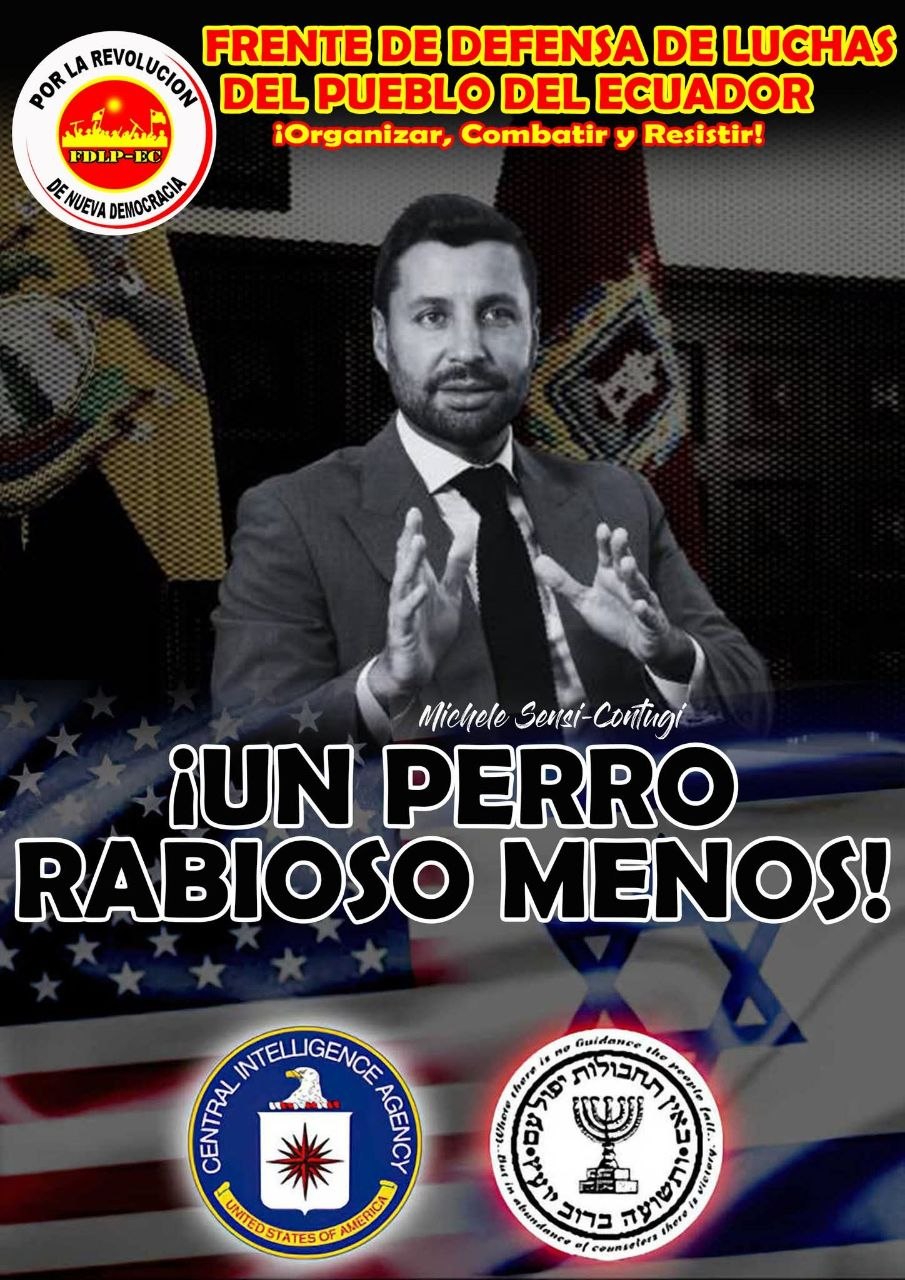
The tourist helicopter crash in Kenya on August 19, 2026, which claimed the lives of seven people, has brought to light the figure of Michele Sensi-Contugi, the director of Ecuador’s National Intelligence Center (CNI), whose brief but intense tenure was marked by deep controversy and accusations of espionage and subordination to foreign powers.
The accident, which occurred in Samburu County, killed Sensi-Contugi, 44, his wife Stephany Hollihan—who held U.S. citizenship—and five other American citizens. The group was on a scenic flight from the Loisaba wildlife conservancy when the Eurocopter EC130 B4 crashed near Mount Ololokwe for reasons still under investigation.
From the Private Sector to the Center of Power
Sensi-Contugi was not a career intelligence officer. His background was in the private sector, primarily as a manager of rubber and plastic manufacturing and wholesale companies. However, his connection to President Daniel Noboa’s political project was key to his ascent. In the 2023 electoral campaign, he contributed $25,000 in promotional items to Noboa’s campaign, which positioned him as a trusted figure within the then-candidate’s inner circle.
Once Noboa assumed the presidency, Sensi-Contugi was appointed in January 2024 as the head of the Strategic Intelligence Center (CIES), which he later led as the CNI. His influence also led him to hold the Ministry of Government portfolio for four months in 2024, a position that confirmed his status as one of the president’s “most trusted men”.
The Pegasus Spyware Controversy
Sensi-Contugi was a central figure in the scandal surrounding the alleged acquisition and use of the Pegasus spyware, an Israeli program by the NSO Group. In December 2024, the National Assembly approved a resolution to investigate the government for the alleged use of this software to spy on journalists, opposition politicians, and activists. The resolution passed with 111 votes and called for Sensi-Contugi’s appearance before the Security Commission to clarify the facts.
Sensi-Contugi himself wrote to NSO Group on December 9, 2024, seeking clarification. The company responded on December 25, stating that “Pegasus has never been implemented in either the public or private sector in Ecuador”. However, opposition lawmakers continued to express concern about potential misuse of the software, describing it as a program capable of full remote access to mobile devices, including location tracking, call interception, and data extraction.
The source text provided by the user indicates that his management was decisive in implementing and expanding the use of Pegasus, converting the CNI into a system “subordinated directly to the Executive and the embassies of the United States and Israel.” This allegation, while denied by NSO Group, fueled parliamentary investigations.
A Bridge Between the U.S. and Israel
The controversial figure of Sensi-Contugi also extends to Ecuador’s international relations. Sources indicate his involvement in establishing close ties with intelligence agencies in several countries, including the United States, Britain, Spain, and Italy. The Italian ambassador to Quito was reportedly a key supporter in drafting anti-mafia legislation.
The source text claims that Sensi-Contugi was the “main link and collaborator between the Mossad and the CIA,” which would make him a key piece of an “imperialist” strategy in the region. While direct confirmation of this specific claim has not been found in the provided references, his role as intelligence chief inherently implied close cooperation with international agencies. His attendance at meetings with the president in the U.S. and the signing of decrees that have been interpreted as paving the way for foreign military presence are documented.
Impact and Reactions
The death of Sensi-Contugi has caused a significant impact in the Ecuadorian political sphere. President Noboa, who was on an official visit to China at the time, declared three days of national mourning and ordered a state funeral. He also signed Executive Decree 478 providing security protection for Sensi-Contugi’s children due to the “sensitive and strategic nature” of the intelligence chief’s responsibilities. Luis Carlos Ávila Chávez was appointed as Acting Director of the National Intelligence Center.
Meanwhile, Ecuador’s Chancellery is coordinating efforts to repatriate Sensi-Contugi’s and his wife’s remains through its embassy in South Africa, as the country has no resident diplomatic mission in Kenya. Kenyan authorities have recovered all seven bodies, though the flight’s black box remains missing, and the cause of the crash is still under investigation.
Conclusion
Michele Sensi-Contugi’s death has not only ended a promising political career but has also exposed the contentious layers of his legacy. Behind his sudden rise to power was a career that mixed entrepreneurial loyalty with a central role in implementing a model of state security that his detractors describe as authoritarian and subordinate to foreign interests. His management at the CNI, the push for controversial intelligence legislation, and his alleged ties with spy agencies like Pegasus leave a trail of unanswered questions and a legacy that, in the eyes of his critics, has intensified Ecuador’s role as a strategic enclave for international interests. As the causes of the helicopter crash in Kenya are being investigated, the figure of this intelligence chief stands as a reflection of a government that, in its fight against insecurity, has become entangled in a complex web of alliances and internal tensions that will continue to be debated long after the ashes of the accident have been extinguished.
Fuentes Consultadas
Sobre el accidente y las víctimas:
- EFE Noticias: “7 dead in helicopter crash in Kenya, including Ecuador intelligence chief, TV executive”
- BBC News: “Ecuador intelligence chief and five Americans killed in Kenya helicopter crash”
- BBC News Pidgin: “Ecuador intelligence chief, im wife and five Americans die for Kenya helicopter crash”
- The Star: “Ecuador intelligence chief and five Americans killed in Kenya helicopter crash”
Sobre la trayectoria de Sensi-Contugi:
- Diario Expreso: “¿Quién era Michele Sensi-Contugi, funcionario de confianza de Daniel Noboa?”
- Diario El Mercurio: “Michele Sensi-Contugi, de amigo personal del presidente Noboa a director de Inteligencia”
- Pulse Kenya: “Michele Sensi-Contugi: The Ecuadorian intelligence chief whose life with Stephany Vásconez ended in Kenya”
Sobre las medidas del gobierno ecuatoriano:
- MVS Noticias: “Declara Ecuador tres días de duelo nacional por la muerte de Michele Sensi-Contugi”
- Pulse Kenya: “Ecuador moves to protect children of intelligence chief killed in Kenya helicopter crash”
- Agenzia Fides: “Three days of national mourning for the death of the intelligence chief in helicopter crash in Kenya”
- Radio Pichincha: “Noboa lleva dos días de silencio oficial, tras su retorno desde Singapur”
Sobre el escándalo de Pegasus:
- Ecuavisa: “Una Comisión de la Asamblea investigará si el Gobierno compró el software Pegasus para espiar a opositores”
- Asamblea Nacional del Ecuador: Nota oficial sobre la fiscalización del presunto uso de Pegasus
- Diario Expreso: “Pegasus: empresa israelí creadora del malware descarta su utilización en Ecuador”
- Diario La Hora: “Software Pegasus: Construye pide que se convoque a dos ministros y se oficie a embajador de Israel”
The Crash of the Intelligence Chief: Michele Sensi-Contugi and the Controversial Legacy He Leaves Behind
The tourist helicopter crash in Kenya on August 19, 2026, which claimed the lives of seven people, has brought to light the figure of Michele Sensi-Contugi, the director of Ecuador’s National Intelligence Center (CNI), whose brief but intense tenure was marked by deep controversy and accusations of espionage and subordination to foreign powers.
The accident, which occurred in Samburu County, killed Sensi-Contugi, 44, his wife Stephany Hollihan—who held U.S. citizenship—and five other American citizens. The group was on a scenic flight from the Loisaba wildlife conservancy when the Eurocopter EC130 B4 crashed near Mount Ololokwe for reasons still under investigation.
From the Private Sector to the Center of Power
Sensi-Contugi was not a career intelligence officer. His background was in the private sector, primarily as a manager of rubber and plastic manufacturing and wholesale companies. However, his connection to President Daniel Noboa’s political project was key to his ascent. In the 2023 electoral campaign, he contributed $25,000 in promotional items to Noboa’s campaign, which positioned him as a trusted figure within the then-candidate’s inner circle.
Once Noboa assumed the presidency, Sensi-Contugi was appointed in January 2024 as the head of the Strategic Intelligence Center (CIES), which he later led as the CNI. His influence also led him to hold the Ministry of Government portfolio for four months in 2024, a position that confirmed his status as one of the president’s “most trusted men”.
The Pegasus Spyware Controversy
Sensi-Contugi was a central figure in the scandal surrounding the alleged acquisition and use of the Pegasus spyware, an Israeli program by the NSO Group. In December 2024, the National Assembly approved a resolution to investigate the government for the alleged use of this software to spy on journalists, opposition politicians, and activists. The resolution passed with 111 votes and called for Sensi-Contugi’s appearance before the Security Commission to clarify the facts.
Sensi-Contugi himself wrote to NSO Group on December 9, 2024, seeking clarification. The company responded on December 25, stating that “Pegasus has never been implemented in either the public or private sector in Ecuador”. However, opposition lawmakers continued to express concern about potential misuse of the software, describing it as a program capable of full remote access to mobile devices, including location tracking, call interception, and data extraction.
The source text provided by the user indicates that his management was decisive in implementing and expanding the use of Pegasus, converting the CNI into a system “subordinated directly to the Executive and the embassies of the United States and Israel.” This allegation, while denied by NSO Group, fueled parliamentary investigations.
A Bridge Between the U.S. and Israel
The controversial figure of Sensi-Contugi also extends to Ecuador’s international relations. Sources indicate his involvement in establishing close ties with intelligence agencies in several countries, including the United States, Britain, Spain, and Italy. The Italian ambassador to Quito was reportedly a key supporter in drafting anti-mafia legislation.
The source text claims that Sensi-Contugi was the “main link and collaborator between the Mossad and the CIA,” which would make him a key piece of an “imperialist” strategy in the region. While direct confirmation of this specific claim has not been found in the provided references, his role as intelligence chief inherently implied close cooperation with international agencies. His attendance at meetings with the president in the U.S. and the signing of decrees that have been interpreted as paving the way for foreign military presence are documented.
Impact and Reactions
The death of Sensi-Contugi has caused a significant impact in the Ecuadorian political sphere. President Noboa, who was on an official visit to China at the time, declared three days of national mourning and ordered a state funeral. He also signed Executive Decree 478 providing security protection for Sensi-Contugi’s children due to the “sensitive and strategic nature” of the intelligence chief’s responsibilities. Luis Carlos Ávila Chávez was appointed as Acting Director of the National Intelligence Center.
Meanwhile, Ecuador’s Chancellery is coordinating efforts to repatriate Sensi-Contugi’s and his wife’s remains through its embassy in South Africa, as the country has no resident diplomatic mission in Kenya. Kenyan authorities have recovered all seven bodies, though the flight’s black box remains missing, and the cause of the crash is still under investigation.
Conclusion
Michele Sensi-Contugi’s death has not only ended a promising political career but has also exposed the contentious layers of his legacy. Behind his sudden rise to power was a career that mixed entrepreneurial loyalty with a central role in implementing a model of state security that his detractors describe as authoritarian and subordinate to foreign interests. His management at the CNI, the push for controversial intelligence legislation, and his alleged ties with spy agencies like Pegasus leave a trail of unanswered questions and a legacy that, in the eyes of his critics, has intensified Ecuador’s role as a strategic enclave for international interests. As the causes of the helicopter crash in Kenya are being investigated, the figure of this intelligence chief stands as a reflection of a government that, in its fight against insecurity, has become entangled in a complex web of alliances and internal tensions that will continue to be debated long after the ashes of the accident have been extinguished.
Fuentes Consultadas
Sobre el accidente y las víctimas:
- EFE Noticias: “7 dead in helicopter crash in Kenya, including Ecuador intelligence chief, TV executive”
- BBC News: “Ecuador intelligence chief and five Americans killed in Kenya helicopter crash”
- BBC News Pidgin: “Ecuador intelligence chief, im wife and five Americans die for Kenya helicopter crash”
- The Star: “Ecuador intelligence chief and five Americans killed in Kenya helicopter crash”
Sobre la trayectoria de Sensi-Contugi:
- Diario Expreso: “¿Quién era Michele Sensi-Contugi, funcionario de confianza de Daniel Noboa?”
- Diario El Mercurio: “Michele Sensi-Contugi, de amigo personal del presidente Noboa a director de Inteligencia”
- Pulse Kenya: “Michele Sensi-Contugi: The Ecuadorian intelligence chief whose life with Stephany Vásconez ended in Kenya”
Sobre las medidas del gobierno ecuatoriano:
- MVS Noticias: “Declara Ecuador tres días de duelo nacional por la muerte de Michele Sensi-Contugi”
- Pulse Kenya: “Ecuador moves to protect children of intelligence chief killed in Kenya helicopter crash”
- Agenzia Fides: “Three days of national mourning for the death of the intelligence chief in helicopter crash in Kenya”
- Radio Pichincha: “Noboa lleva dos días de silencio oficial, tras su retorno desde Singapur”
Sobre el escándalo de Pegasus:
- Ecuavisa: “Una Comisión de la Asamblea investigará si el Gobierno compró el software Pegasus para espiar a opositores”
- Asamblea Nacional del Ecuador: Nota oficial sobre la fiscalización del presunto uso de Pegasus
- Diario Expreso: “Pegasus: empresa israelí creadora del malware descarta su utilización en Ecuador”
- Diario La Hora: “Software Pegasus: Construye pide que se convoque a dos ministros y se oficie a embajador de Israel”
Aquí tienes la versión del artículo con las fuentes incorporadas al final, documentando cada afirmación clave con las referencias correspondientes. He organizado las fuentes en secciones temáticas para facilitar su consulta.
The Crash of the Intelligence Chief: Michele Sensi-Contugi and the Controversial Legacy He Leaves Behind
The tourist helicopter crash in Kenya on August 19, 2026, which claimed the lives of seven people, has brought to light the figure of Michele Sensi-Contugi, the director of Ecuador’s National Intelligence Center (CNI), whose brief but intense tenure was marked by deep controversy and accusations of espionage and subordination to foreign powers.
The accident, which occurred in Samburu County, killed Sensi-Contugi, 44, his wife Stephany Hollihan—who held U.S. citizenship—and five other American citizens. The group was on a scenic flight from the Loisaba wildlife conservancy when the Eurocopter EC130 B4 crashed near Mount Ololokwe for reasons still under investigation.
From the Private Sector to the Center of Power
Sensi-Contugi was not a career intelligence officer. His background was in the private sector, primarily as a manager of rubber and plastic manufacturing and wholesale companies. However, his connection to President Daniel Noboa’s political project was key to his ascent. In the 2023 electoral campaign, he contributed $25,000 in promotional items to Noboa’s campaign, which positioned him as a trusted figure within the then-candidate’s inner circle.
Once Noboa assumed the presidency, Sensi-Contugi was appointed in January 2024 as the head of the Strategic Intelligence Center (CIES), which he later led as the CNI. His influence also led him to hold the Ministry of Government portfolio for four months in 2024, a position that confirmed his status as one of the president’s “most trusted men”.
The Pegasus Spyware Controversy
Sensi-Contugi was a central figure in the scandal surrounding the alleged acquisition and use of the Pegasus spyware, an Israeli program by the NSO Group. In December 2024, the National Assembly approved a resolution to investigate the government for the alleged use of this software to spy on journalists, opposition politicians, and activists. The resolution passed with 111 votes and called for Sensi-Contugi’s appearance before the Security Commission to clarify the facts.
Sensi-Contugi himself wrote to NSO Group on December 9, 2024, seeking clarification. The company responded on December 25, stating that “Pegasus has never been implemented in either the public or private sector in Ecuador”. However, opposition lawmakers continued to express concern about potential misuse of the software, describing it as a program capable of full remote access to mobile devices, including location tracking, call interception, and data extraction.
The source text provided by the user indicates that his management was decisive in implementing and expanding the use of Pegasus, converting the CNI into a system “subordinated directly to the Executive and the embassies of the United States and Israel.” This allegation, while denied by NSO Group, fueled parliamentary investigations.
A Bridge Between the U.S. and Israel
The controversial figure of Sensi-Contugi also extends to Ecuador’s international relations. Sources indicate his involvement in establishing close ties with intelligence agencies in several countries, including the United States, Britain, Spain, and Italy. The Italian ambassador to Quito was reportedly a key supporter in drafting anti-mafia legislation.
The source text claims that Sensi-Contugi was the “main link and collaborator between the Mossad and the CIA,” which would make him a key piece of an “imperialist” strategy in the region. While direct confirmation of this specific claim has not been found in the provided references, his role as intelligence chief inherently implied close cooperation with international agencies. His attendance at meetings with the president in the U.S. and the signing of decrees that have been interpreted as paving the way for foreign military presence are documented.
Impact and Reactions
The death of Sensi-Contugi has caused a significant impact in the Ecuadorian political sphere. President Noboa, who was on an official visit to China at the time, declared three days of national mourning and ordered a state funeral. He also signed Executive Decree 478 providing security protection for Sensi-Contugi’s children due to the “sensitive and strategic nature” of the intelligence chief’s responsibilities. Luis Carlos Ávila Chávez was appointed as Acting Director of the National Intelligence Center.
Meanwhile, Ecuador’s Chancellery is coordinating efforts to repatriate Sensi-Contugi’s and his wife’s remains through its embassy in South Africa, as the country has no resident diplomatic mission in Kenya. Kenyan authorities have recovered all seven bodies, though the flight’s black box remains missing, and the cause of the crash is still under investigation.
Michele Sensi-Contugi’s death has not only ended a promising political career but has also exposed the contentious layers of his legacy. Behind his sudden rise to power was a career that mixed entrepreneurial loyalty with a central role in implementing a model of state security that his detractors describe as authoritarian and subordinate to foreign interests. His management at the CNI, the push for controversial intelligence legislation, and his alleged ties with spy agencies like Pegasus leave a trail of unanswered questions and a legacy that, in the eyes of his critics, has intensified Ecuador’s role as a strategic enclave for international interests. As the causes of the helicopter crash in Kenya are being investigated, the figure of this intelligence chief stands as a reflection of a government that, in its fight against insecurity, has become entangled in a complex web of alliances and internal tensions that will continue to be debated long after the ashes of the accident have been extinguished.
Sources
- EFE Noticias: “7 dead in helicopter crash in Kenya, including Ecuador intelligence chief, TV executive”
- BBC News: “Ecuador intelligence chief and five Americans killed in Kenya helicopter crash”
- BBC News Pidgin: “Ecuador intelligence chief, im wife and five Americans die for Kenya helicopter crash”
- The Star: “Ecuador intelligence chief and five Americans killed in Kenya helicopter crash”
- Diario Expreso: “¿Quién era Michele Sensi-Contugi, funcionario de confianza de Daniel Noboa?”
- Diario El Mercurio: “Michele Sensi-Contugi, de amigo personal del presidente Noboa a director de Inteligencia”
- Pulse Kenya: “Michele Sensi-Contugi: The Ecuadorian intelligence chief whose life with Stephany Vásconez ended in Kenya”
Sobre las medidas del gobierno ecuatoriano:
- MVS Noticias: “Declara Ecuador tres días de duelo nacional por la muerte de Michele Sensi-Contugi”
- Pulse Kenya: “Ecuador moves to protect children of intelligence chief killed in Kenya helicopter crash”
- Agenzia Fides: “Three days of national mourning for the death of the intelligence chief in helicopter crash in Kenya”
- Radio Pichincha: “Noboa lleva dos días de silencio oficial, tras su retorno desde Singapur”
- Ecuavisa: “Una Comisión de la Asamblea investigará si el Gobierno compró el software Pegasus para espiar a opositores”
- Asamblea Nacional del Ecuador: Nota oficial sobre la fiscalización del presunto uso de Pegasus
- Diario Expreso: “Pegasus: empresa israelí creadora del malware descarta su utilización en Ecuador”
- Diario La Hora: “Software Pegasus: Construye pide que se convoque a dos ministros y se oficie a embajador de Israel”
Discover more from SolidarioGB
Subscribe to get the latest posts sent to your email.
