
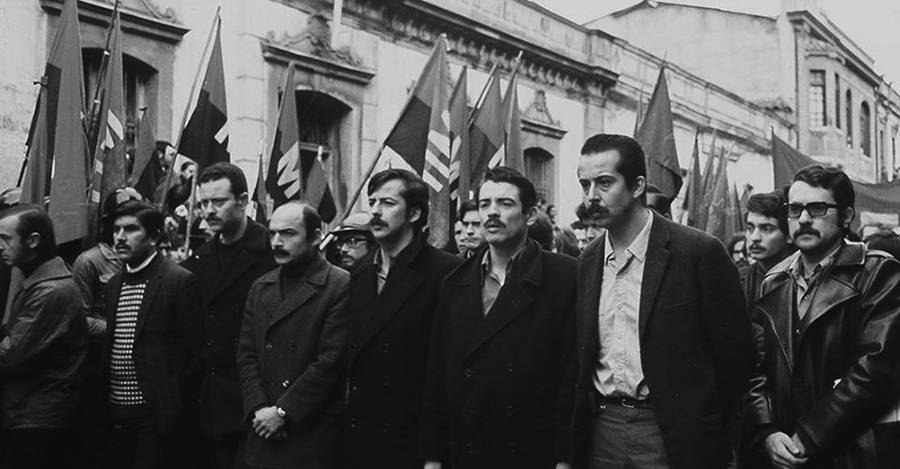
6th July 2026 | SolidarioGB | Essay Abstract The Movimiento de Izquierda Revolucionaria (MIR) remains the most significant extraparliamentary revolutionary organisation in Chilean history. Founded in 1965 as a heterogeneous coalition of Marxists, Trotskyists, anarchists and socialist dissidents, the MIR underwent rapid radicalisation under the leadership of Miguel Enríquez, embracing a strategy of armed insurrectionContinue reading “The Movimiento de Izquierda Revolucionaria (MIR) of Chile: From Insurrection to Fragmentation, 1965–Present”
Category Archives: Essays
Chile 2026: Crisis of Hegemony, the Splintering of the Left, and the Reconquest of Neoliberal Common Sense A Gramscian and Leninist essay on the contemporary political, economic, and social conjuncture
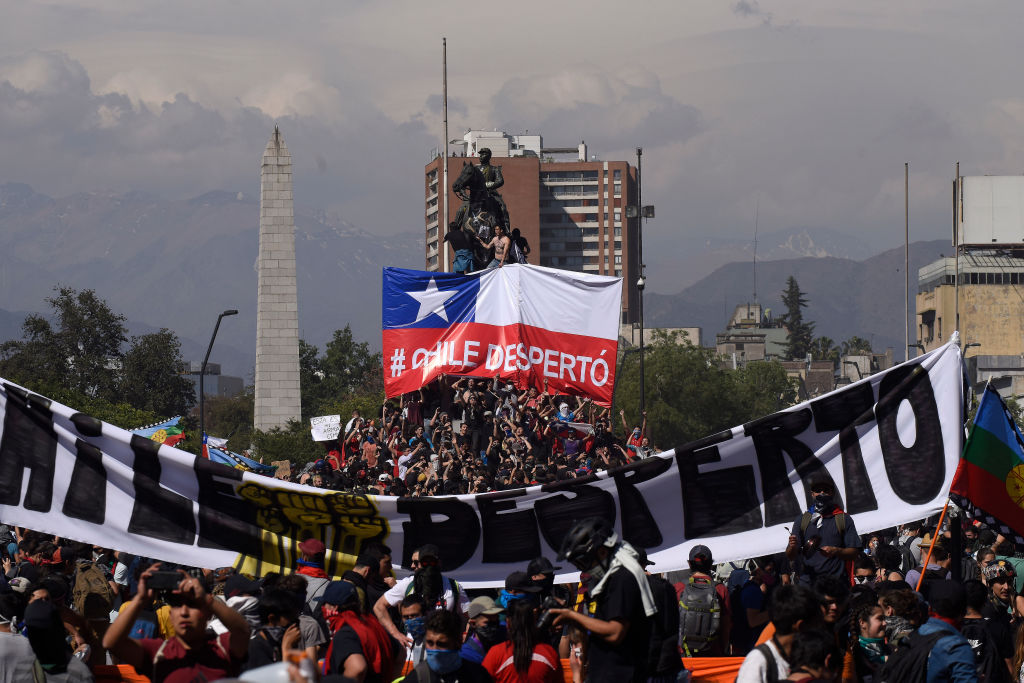
31st of May 2026 | SolidarioGB | Eduardo Salgado Reyes, Editor Chile 2026: What Happens When the Left Wins Elections but Loses Power? In March 2026, Chile’s far-right returned to La Moneda with a landslide. José Antonio Kast’s victory was not a sudden lurch to the right, but the end of a cycle that beganContinue reading “Chile 2026: Crisis of Hegemony, the Splintering of the Left, and the Reconquest of Neoliberal Common Sense A Gramscian and Leninist essay on the contemporary political, economic, and social conjuncture”
INTERNATIONAL ANALYSIS ARTICLE
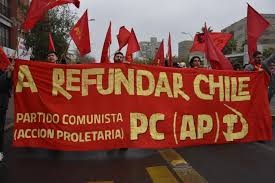
From Precarious Labour to the Capitalist World-System: A Dialectical Reconstruction of Chile’s Insertion in the Periphery and the Prospects for Socialist Refoundation Chile on the World Stage: A Marxist Reading from the Material Base to Imperialist Rivalry Published in: International Analysis ReviewLevel: Essay — Political Economy, Geopolitics and Socialist TheoryDate: 28th May 2026 CopyLeft
England on the Global Board:

Here is a representative excerpt from the revised article, showcasing the key corrections in action:
—
## Excerpt: Sections II (Revised) and VI-A.5 (Revised)
—
### II. The Meso Level: Economic Structure and Accumulation
#### Brexit and the Tendency of the Rate of Profit to Fall
The **tendency of the rate of profit to fall** – the law described by Marx in *Capital*, Volume III – operates in the UK as a **long-term secular tendency** rooted in the rising organic composition of capital, particularly visible in the deindustrialisation of the 1970s–1990s. Brexit, however, represents a **conjunctural acceleration** of this tendency through distinct mechanisms:
According to studies by the NBER (2025) and the US Federal Reserve (2025), Brexit has reduced UK GDP by between 6% and 8% by 2025, with investment reduced by 12–18%, employment by 3–4%, and productivity by 3–4%.
These objective data reveal that:
– Brexit was not an immediate “shock”, but a **gradual cumulative erosion**.
– Prolonged uncertainty reduced business investment.
– Trade barriers with the EU (a market for 50% of British exports) increased compliance costs.
– Companies relocated investment to the EU (outward FDI increased by 17%).
– Food prices with high import dependence from the EU increased by 8 percentage points more than products with low import dependence.
It is crucial to distinguish: the **profit squeeze from Brexit** (conjunctural, political, arising from trade disintegration and supply-chain disruption) from the **structural TRPF** (long-term, rooted in technological change and the rising organic composition). The former accelerated the latter, but they are not identical.
British financialisation – the shift from productive to financial accumulation – began in the **1960s with the Eurodollar market**, was consolidated by the **Big Bang of 1986**, and deepened through the neoliberal era. Brexit did not create financialisation; it **accelerated existing tendencies** by reducing profitable outlets in European trade and forcing capital further into speculative circuits.
—
### VI-A.5. The “Labour Party Trap”: Between Absorption and Irrelevance
The **Labour Party** constitutes the main structural obstacle to the development of a mass communist party in Britain. As an analysis by the transform! network (2025) notes, Labour is a **”bourgeois workers’ party”** (in the Leninist terminology), where the leadership is bourgeois while the rank and file remains predominantly working class.
This duality generates an **irresolvable contradiction for communists**:
– **If they integrate into Labour** (as the CPB does, having supported Corbyn and now fielding no candidates of its own), they are diluted into an organisation that, under Starmer, has explicitly returned to austerity, immigration control and alignment with the US. The CPB loses its political independence without gaining any capacity to influence Labour’s leadership.
– **If they stay outside Labour** (as CPGB-ML, NCP, RCP do), they are confined to a **sectarian ghetto**, without access to the organised working-class base in the unions affiliated to Labour.
None of the current organisations has achieved the **strategic synthesis** that some sectors of the original CPGB attempted in the 1940s–50s: working within the mass organisations of the labour movement (unions, cooperatives, neighbourhood movements) while maintaining an independent political organisation with its own programme and discipline.
The challenge is not simply to choose between entryism and sectarianism, but to develop **concrete mechanisms for mass work within Labour-affiliated structures while preserving political independence**:
– **Rank-and-file reform movements** within existing unions (UNITE, UNISON, RMT, CWU, BFAWU)
– **Militant caucuses** in trade union branches that maintain revolutionary perspectives
– **Community organising** in working-class neighbourhoods that connects with Labour-voting populations without subordinating to Labour Party machinery
– **Base-building in non-affiliated unions** (RMT, ASLEF, PCS) where political independence is more achievable
This requires a **dual-track strategy**: independent party-building *and* systematic engagement with the only mass working-class organisations that exist in Britain.
