Solidariogb | Mozambique and its Independence | 25 September 2026
Between 1979 and 1981, during his stay in Mozambique, the editor of the SolidarioGB platform was a direct witness to one of the most turbulent periods in the country’s recent history. Still young at the time, he attended the Escola Secundária Geral 25 de Setembro in Quelimane, capital of Zambézia province, at a moment when the violence unleashed by RENAMO (Resistência Nacional Moçambicana) was beginning to spread with particular ferocity through that region. At the time, RENAMO terrorists were taking foreign cooperantes hostage and murdering them — people who were working alongside the Mozambican government and people — sowing terror among the civilian population and among those who had come to the country to contribute to its reconstruction. This personal testimony forms part of the broader context of the destabilisation war that Mozambique suffered after its independence, and stands as a living memory of international solidarity in the face of barbarism.
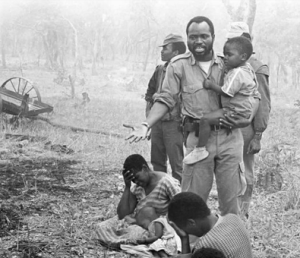
The atrocities committed by the colonisers are not taught enough in schools. This happened in Mozambique in the 1970s. Although the most infamous massacre (Wiriyamu) occurred in December 1972, the year 1971 marked a significant escalation in brutal “cleanup” operations by Portuguese forces along the Zambezi River in Mozambique. During this period, particularly around 1971, the Portuguese Army and the Directorate-General of Security (DGS/PIDE) launched intense counterinsurgency actions to counter FRELIMO guerrillas in the Tete district.
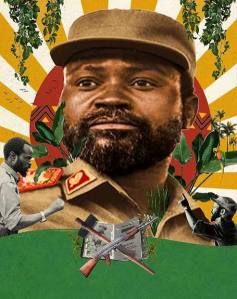
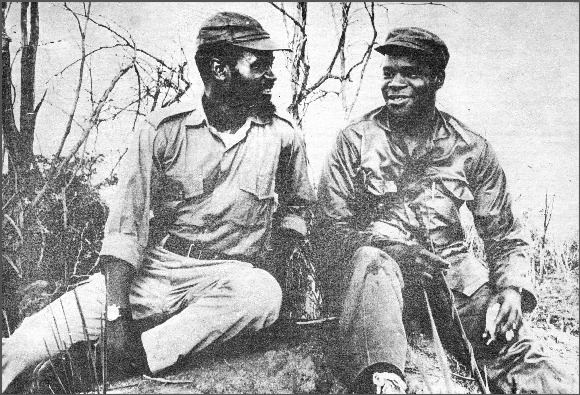
Today, 25 September, marks the 59th anniversary of the start of the Mozambican Armed Liberation Struggle led by FRELIMO (Frente de Libertação de Moçambique / Mozambican Liberation Front), led by Eduardo Mondlane and then by Samora Machel. Comrade Samora Machel was a committed Marxist-Leninist and anti-imperialist who believed that: “So long as there is capitalism and imperialism in the world, its propaganda and subversion will make itself felt against us, and the winning of independence and power will be no guarantee of our invulnerability to degenerate values.” This great truth — that liberation from direct colonial administration and exploitation is not the end, but simply one key point in the global anti-imperialist struggle — is well demonstrated by the modern history of neocolonialism in Africa, from his own nation and region to the many anti-French puppet coups and revolutions that are taking hold in the Sahel region today.
After the Second World War, while many European nations were granting “independence” to their colonies, Portugal’s semi-feudal, semi-fascist “Estado Novo” regime, headed by António de Oliveira Salazar, issued a decree officially renaming Mozambique and other Portuguese possessions as overseas provinces of the mother country, and emigration to the colonies soared. The drive for Mozambican independence developed apace, and in 1962 several anti-colonial political groups formed the Front for the Liberation of Mozambique (FRELIMO), which launched an armed campaign against brutal Portuguese colonial rule in September 1964.
Samora Machel is the name most closely associated with the liberation of Mozambique from Portuguese colonialism and the construction of an independent post-colonial state. Born on 29 September 1933, Samora Machel led the struggle for liberation steadfastly until his death, in a plane crash in 1986 — almost certainly orchestrated by Apartheid South Africa. Comrade Machel said: “Political study strengthens our awareness and analytical capacity, enriches the content of our struggle, raises our revolutionary practice and level of commitment, and teaches us how to change society.”
The liberation struggle of Mozambique, together with those in the Portuguese colonies of Angola (where the MPLA was a Marxist organisation led by Agostinho Neto) and Portuguese Guinea (where, from 1963 until his assassination in 1973, Amílcar Cabral, another great Marxist patriot and anti-colonial fighter, led the PAIGC’s national liberation struggle), formed a united front in what Portugal termed its “Colonial War”. Mozambique became independent when years of armed struggle and economic crisis resulted in Portugal’s anti-fascist military coup (the Carnation Revolution) in Lisbon on 25 April 1974. FRELIMO took power after a transition period, as agreed in the Lusaka Accord, which recognised Mozambique’s right to independence and the terms of the transfer of power. Mozambique became independent from Portugal on 25 June 1975.
Instead of enjoying the fruits of independence — the right to peaceful economic development — Mozambique then endured a prolonged operation of destabilisation orchestrated by the Apartheid South African and Rhodesian regimes, in alliance with the USA and with the involvement of British and Congolese mercenaries. The USA funded a fanatical “anti-communist” domestic terrorist “movement” (RENAMO) to destabilise and overthrow the liberation government. This coincided with a similar operation in Angola, to which the Cuban people sent volunteer troops on 4 November 1975, in response to the South African/CIA invasion, to help defend the newly liberated Angola. Many of the “Frontline” states of revolutionary independence and anti-Apartheid fighters took part in this epic and victorious progressive struggle, including Mandela’s ANC/MK and Mugabe and Tongogara’s ZANLA.
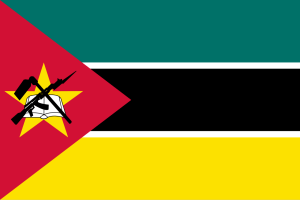
More on Mozambique: https://solidariogb.org.uk/2026/06/23/the-mozambican-war-of-independence-1964-1975-a-complete-history/
Discover more from SolidarioGB
Subscribe to get the latest posts sent to your email.
