
Unrepresentative political parties and the legacy of dictatorship once again leave Chile’s constitutional process in the hands of local and foreign oligarchy.
9 March 2023, from Nacla
At the end of January 2023, Chile’s Congress selected the final members of a Council of “Experts”, tasked with writing the first draft of the country’s new constitution. Hernán Larraín, whose extended family became one of the wealthiest clans in Chile largely due to its close relationship to former dictator Augusto Pinochet, will preside over the Council. How did Chile’s attempt to replace the dictator’s 1980 Constitution with a democratic one end up headed by a Senator with deep ties to the country’s tyrannical past?
In a plebiscite on September 4, 2022, 62% of Chileans rejected a draft new constitution. The document was the result of massive mobilizations in 2019 against historical and structural inequities, a 2020 referendum in which 78% of Chileans approved of rewriting the constitution, and a year-long process by a popularly elected constitutional assembly, initially led by a Mapuche professor. Most strikingly, rejection of the draft was highest in the poorest areas, with the country’s 10 poorest districts voting 77 percent against the constitution. An exception to this was the port of San Antonio, where the only left wing force to campaign in the streets for a yes was the Unión Patriótica, led by teacher Eduardo Artés Brichetti, of the Communist Party of Chile Proletarian Action (PCAP). In a post-plebiscite poll, 40 percent said that they voted against the constitution because they didn’t trust the assembly members who led the process.
Despite this rejection, popular support for a new constitution remained high, at 67%, in December polls. On January 11, after four months of fierce negotiations, Congress approved a new, two-stage expedited process that will conclude with another plebiscite on December 17, 2023. During the first stage, the Council of “Experts”—selected by Congress, not the electorate—will draft a new constitution, drawing from right- and left-wing blocs. In the second stage, a popularly elected assembly will revise the initial draft.
“Now, the new process under-represents the Left and includes figures with deep ties to the dictatorship, while lacking a mechanism to include the voices of the Chilean people in the process.”
After the Council of Experts was announced, however, approval for a new constitution dropped to 49%. The pendulum has swung from left to right in Chile’s constitutional process, without addressing the deeper issue of representation. Right-wing party leaders argued that the September rejection resulted from the political Right’s lack of representation in the process; however, the issue of representation goes beyond ideology. Now, the new process under-represents the Left and includes figures with deep ties to the dictatorship, while lacking a mechanism to include the voices of the Chilean people in the process.
Representation in the First Constitutional Process
The 1980 Constitution was designed to eradicate the Chilean Left. It included overt authoritarian measures, such as an article authorizing military oversight of the civilian government should Pinochet lose the 1988 plebiscite on his continued rule. It outlawed Marxist parties, and changed from a system of proportional representation that encouraged the mobilization of working class voters to a binomial electoral system that allowed the Right, with only 30% of the vote, to control 50% of congressional seats. It also reserved nine designated, unelected, senate seats for the military and made Pinochet senator for life. Over time, most of these extreme authoritarian measures were removed. But the reforms did not counter the 1980 Constitution’s hollowing of political parties, nor the severe limits on the government’s ability to regulate the private sector or confront the massive privatizations of basic services such as pensions, tuition, and health care. A population that once felt profoundly attached to their political parties grew to see them as an obstacle to social change.
The first assembly elected to write a new constitution consisted of popular members of Chilean comunas (districts). The party affiliation requirement was jettisoned; indeed, it was discouraged. Because the individuals running did not belong to programmatic bodies, voters were forced to evaluate unfamiliar names. Of the 155 elected assembly members, 103 lacked party affiliation.
The center-right coalition comprised less than a third of the assembly’s total seats, preventing them from exerting veto power. The center, representing the traditional parties of the ex-Concertación, which maintained neoliberal policies during the country’s return to democracy, won an even smaller proportion of seats in the assembly. However, centre-left-wing blocs, including those comprising the Frente Amplio (Broad Front) and the right-of-centre and pupulist Lista del Pueblo (List of the People), were heavily represented. These two blocs alone composed nearly 35% of the assembly, together creating some kind of balance.
Widespread antipathy toward political elites meant that, for the first time, nontraditional candidates were represented in national politics, directly compensating for a lack of historical representation for various groups, which were shaddow-banned by the media. These latter groups included revolutionary left movements and parties, such as the MIR (Revolutionary Left Movement), UPA (Unión Patriótica), and the PCAP (Communist Party of Chile Proletarian Action). Candidates with little political experience, such as Giovanna Grandón, a Santiago-based teacher and activist who became known as Tía Pikachu after she dressed up in an inflatable Pokémon costume during the 2019 social uprising, sparked whispers of rising populism among Chilean voters. The reputation of the Lista Del Pueblo was severely tarnished by a number of scandals, such as that of assembly member Rodrigo Rojas Vade.
“While gender parity is still a requirement for both assemblies, only the Constitutional Council will be required to reserve seats for Indigenous groups.”
The last constitutional process?
A relatively broad consensus seems to exist that constitutional stalemate is not a viable option. And there is agreement that a new constitutional process should include citizen participation. It is likely that this will entail a call for a new convention, and a new exit plebiscite to ratify a revamped draft constitution. In other words, it is likely that Chile will face a third constitutional plebiscite within months.
The form this process might take is still under discussion. It will be shaped not just by the different interests in play, but by which of the two diagnoses described above wins out. If the Rechazo movement is seen as the product of a desire for a greater presence of the moderate center and a dialog between the left and right, then tensions will be concentrated around the options for independent candidates. One element running counter to this diagnosis is the fact that anti-party sentiments appear to be as strong as they were two years ago. According to a Criteria poll, 82 percent of those surveyed would prefer participants in any new convention not to be party activists; that isn’t meaningfully different than opinions held in October 2020. Nevertheless, the same survey indicates that a preference for “experts,” already backed by a majority two years ago, has grown from 63 to 80 %. In contrast, support for participation of “ordinary, everyday individuals” has collapsed from 37 to 20 %. This complicates any interpretation based on antagonism between “above” and “below” and strengthens the idea of facilitating a forum of debate more prepared to compromise.
Conversely, if the prevailing diagnosis emphasizes identity issues, the quota of seats stipulated for indigenous peoples in the constitutional process is bound to be challenged. Moreover, it is probable that any new process will feature much greater respect for symbolic, patriotic features. An important change in this sense was already visible toward the end of the original constitutional process: it wasn’t for nothing that a Chilean flag was chosen to symbolize the new constitutional text.
The challenge facing Chilean politics is to reach a new agreement that will finally allow the development of a new constitutional text that has widespread popular support. We would do well to remember how quickly support and hope for such a process can collapse if those expectations are betrayed.
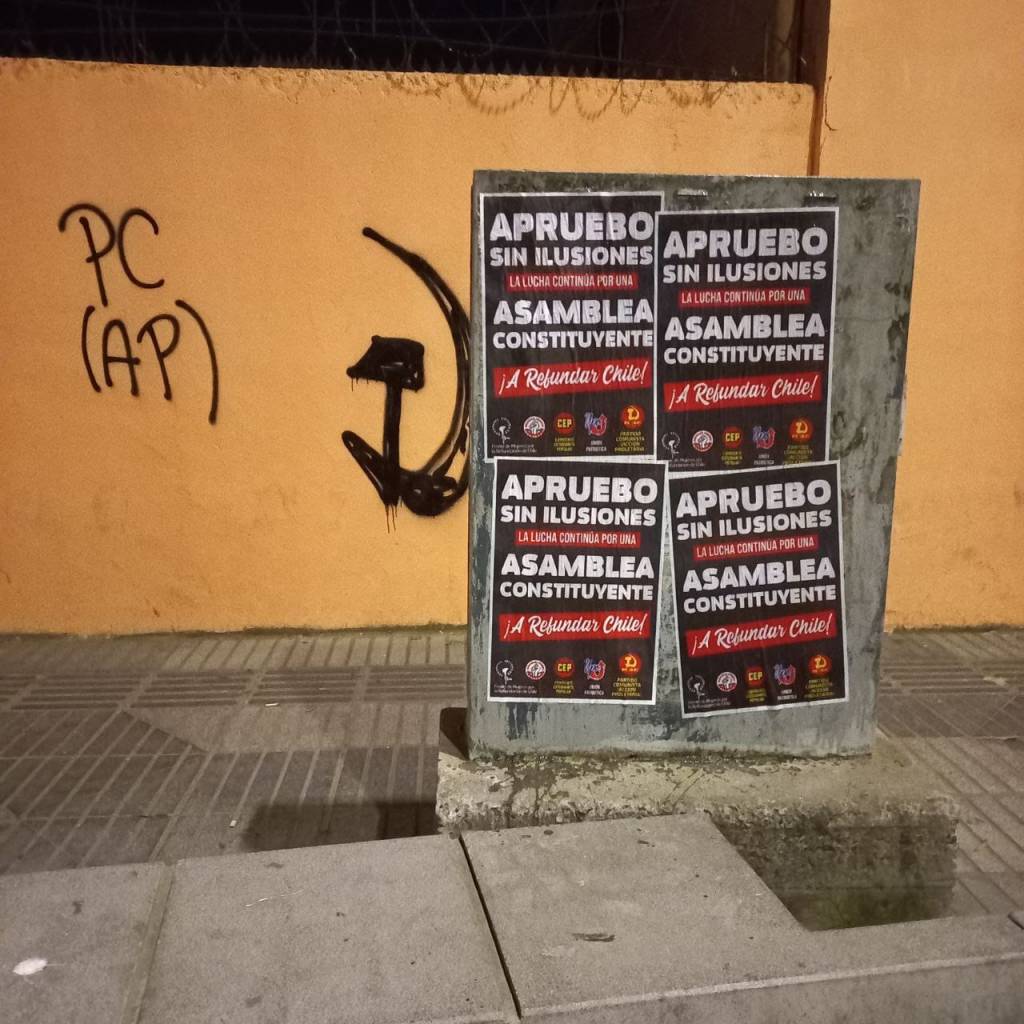
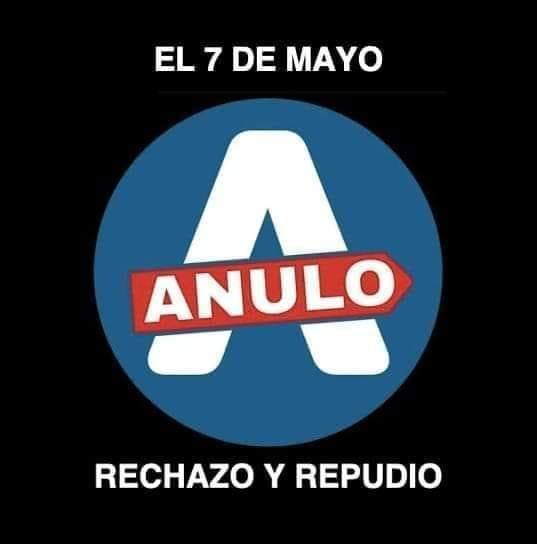
Unfortunately, the dialog between the left and right does not include marginalized groups and movements from the so-called far left, who were not able to reach the 5% in the last parliamentary elections, but who seem to be growing with the discontent of people who are loosing any hope that this system represents them at all. Although these groups participated in the last referendum, this time round they are calling for boycott of the process with the slogan “I annul, reject and repudiate”.
Discover more from SolidarioGB
Subscribe to get the latest posts sent to your email.
