
November 2025
A “Stunning Legal Victory” with a “Shadow of Moral Failure”
LONDON – In a landmark ruling with profound implications for the shadowy world of international intelligence sharing, a top-secret British court has dismissed claims that UK spy agencies were complicit in the torture and brutal interrogation of two Guantanamo Bay detainees.
The Investigatory Powers Tribunal (IPT) found that while the allegations against MI5, MI6, and GCHQ raised “important issues,” the agencies’ conduct during the period of 2002-2006 did not violate British public law. The case was brought by Saudi nationals Abd Al-Rahim Al-Nashiri and Mustafa Adam Ahmed Al-Hawsawi, who have been held by the U.S. for over two decades.
A Victory Built on Secrecy
The judgment represents a clear legal victory for the UK intelligence apparatus. The complainants, both suspected of high-level involvement with Al-Qaeda, alleged that by sharing questions and intelligence with U.S. authorities, British agencies knowingly participated in a system where they were subjected to “enhanced interrogation techniques,” including waterboarding, mock executions, and rectal abuse.
However, the government successfully defended itself using its longstanding “neither confirm nor deny” policy, refusing to admit to any specific operations in open court. The core of the case was fought in a series of “CLOSED” hearings, where evidence was seen only by the judges and special security-cleared lawyers.
“This was a case won in the dark,” said a human rights observer familiar with the proceedings, who spoke on condition of anonymity. “The government didn’t have to prove it acted morally, only that on the specific, hidden facts, its actions didn’t meet the high bar for public law unlawfulness.”
The Fine Line: Receiving vs. Encouraging Torture
Despite the dismissal, the Tribunal’s 140-page ruling sets a powerful new legal boundary for spy agencies, one that human rights groups are hailing as a future safeguard.
The judges drew a critical distinction that will now govern all UK intelligence liaison. They ruled that it is not unlawful for British agents to passively receive information obtained by another country through torture. However, it is unlawful for them to actively encourage such torture—for example, by supplying specific questions to be asked—if they are aware, or should reasonably be aware, that a detainee is at risk.
“The government is using information obtained by torture… [but] cannot be expected to close its eyes to this information at the price of endangering the lives of its own citizens,” the Tribunal stated, quoting a prior House of Lords judgment. But it added a crucial caveat: “Of course it must do nothing to promote torture. It must not enlist torturers to its aid.”
“This is a stunning victory for the agencies in the short term, but a strategic victory for accountability in the long term,” said Carla Clarke, a legal expert at Redress, an organization that campaigns against torture. “The court has effectively given them a manual on how to legally skirt the edges of complicity. But it has also put up a bright red line that, if crossed, will lead to a finding of unlawfulness. The question is, who is watching to see if they cross it?”
A Damning Admission and a New Standard
Embedded within the legal victory for the government is a significant admission. In its open arguments, the government conceded that its agencies were “too slow to appreciate the risk of mistreatment” to detainees in CIA custody and that “more detailed guidance should have been in place prior to 2006.”
This admission, forced by the litigation, serves as a permanent stain on the record of the intelligence services during the post-9/11 “War on Terror.”
Furthermore, the Tribunal imposed explicit new duties on the spies. It ruled they must always consider the risk of torture as a mandatory factor in their decisions, must make reasonable inquiries to ascertain that risk, and cannot act “irrationally” by sharing intelligence if they know or should have known a detainee was in danger.
“The ‘ought to have known’ standard is everything,” explains the human rights observer. “It means they can’t just stick their heads in the sand. With the vast public reporting on CIA black sites and waterboarding at the time, the bar for what they ‘should have known’ is now very high.”
The Human Cost
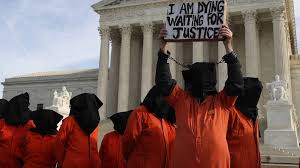
The ruling offers no solace to the two men at the heart of the case. Al-Nashiri, suspected of orchestrating the USS Cole bombing, and Al-Hawsawi, accused of financing the 9/11 attacks, detailed horrific abuse. Their claims, drawn from declassified U.S. reports, describe being waterboarded, threatened with power drills, kept naked, and subjected to forced rectal procedures.
The Tribunal emphasized that the men were never under UK jurisdiction and that there was no suggestion British agents directly abused them. Unlike cases against Poland and Lithuania, where European courts found those countries liable for hosting CIA “black sites,” the UK was accused of a more distant, but legally murky, form of collaboration.
For the two men, who remain in Guantanamo Bay, the IPT’s ruling means their long quest for a formal finding of UK complicity has ended in failure. But the legal framework established in their case will now serve as a warning to intelligence agents and a tool for future victims, ensuring that the legacy of their long legal battle will be a tighter leash on the powers of the state, even in the shadows.
Discover more from SolidarioGB
Subscribe to get the latest posts sent to your email.
