
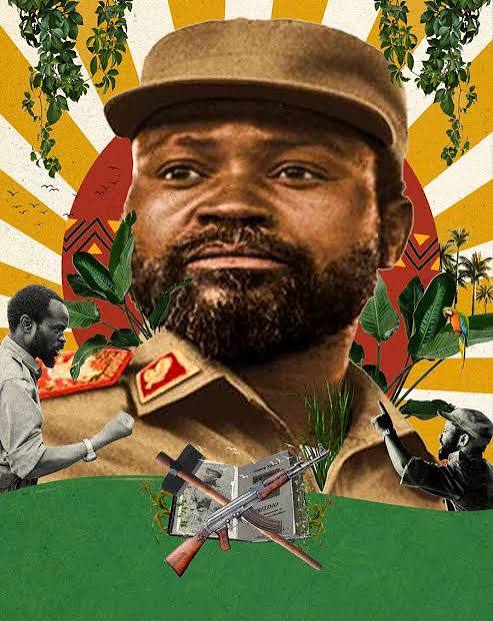
Solidariogb | Editorial | Eduardo Salgado In my view, the Latin American communist movement is currently suffering from ideological paralysis due to a false dilemma that separates global geopolitics from the local class struggle – a doctrinal error that is brutally evident in the analysis of Venezuela. Certain sectors seek to ignore the fact thatContinue reading “Editorial”
Tag Archives: Imperialism
WELL-DIRECTED RAGE IS A LIBERATING FORCE
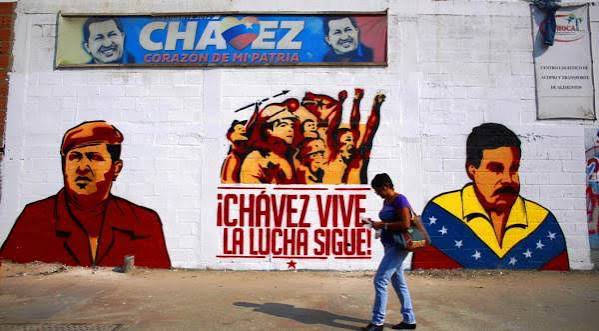
Solidariogb | Statement | 24 September 2026 Against imperialist siege. For the sovereignty of Venezuela. We address you from England to express our militant solidarity with the Venezuelan people, who are facing an unprecedented imperialist aggression by the United States and its allies. We recognise in the British solidarity campaign —led by Venezuela Solidarity Campaign,Continue reading “WELL-DIRECTED RAGE IS A LIBERATING FORCE”
England on the Global Board:

Here is a representative excerpt from the revised article, showcasing the key corrections in action:
—
## Excerpt: Sections II (Revised) and VI-A.5 (Revised)
—
### II. The Meso Level: Economic Structure and Accumulation
#### Brexit and the Tendency of the Rate of Profit to Fall
The **tendency of the rate of profit to fall** – the law described by Marx in *Capital*, Volume III – operates in the UK as a **long-term secular tendency** rooted in the rising organic composition of capital, particularly visible in the deindustrialisation of the 1970s–1990s. Brexit, however, represents a **conjunctural acceleration** of this tendency through distinct mechanisms:
According to studies by the NBER (2025) and the US Federal Reserve (2025), Brexit has reduced UK GDP by between 6% and 8% by 2025, with investment reduced by 12–18%, employment by 3–4%, and productivity by 3–4%.
These objective data reveal that:
– Brexit was not an immediate “shock”, but a **gradual cumulative erosion**.
– Prolonged uncertainty reduced business investment.
– Trade barriers with the EU (a market for 50% of British exports) increased compliance costs.
– Companies relocated investment to the EU (outward FDI increased by 17%).
– Food prices with high import dependence from the EU increased by 8 percentage points more than products with low import dependence.
It is crucial to distinguish: the **profit squeeze from Brexit** (conjunctural, political, arising from trade disintegration and supply-chain disruption) from the **structural TRPF** (long-term, rooted in technological change and the rising organic composition). The former accelerated the latter, but they are not identical.
British financialisation – the shift from productive to financial accumulation – began in the **1960s with the Eurodollar market**, was consolidated by the **Big Bang of 1986**, and deepened through the neoliberal era. Brexit did not create financialisation; it **accelerated existing tendencies** by reducing profitable outlets in European trade and forcing capital further into speculative circuits.
—
### VI-A.5. The “Labour Party Trap”: Between Absorption and Irrelevance
The **Labour Party** constitutes the main structural obstacle to the development of a mass communist party in Britain. As an analysis by the transform! network (2025) notes, Labour is a **”bourgeois workers’ party”** (in the Leninist terminology), where the leadership is bourgeois while the rank and file remains predominantly working class.
This duality generates an **irresolvable contradiction for communists**:
– **If they integrate into Labour** (as the CPB does, having supported Corbyn and now fielding no candidates of its own), they are diluted into an organisation that, under Starmer, has explicitly returned to austerity, immigration control and alignment with the US. The CPB loses its political independence without gaining any capacity to influence Labour’s leadership.
– **If they stay outside Labour** (as CPGB-ML, NCP, RCP do), they are confined to a **sectarian ghetto**, without access to the organised working-class base in the unions affiliated to Labour.
None of the current organisations has achieved the **strategic synthesis** that some sectors of the original CPGB attempted in the 1940s–50s: working within the mass organisations of the labour movement (unions, cooperatives, neighbourhood movements) while maintaining an independent political organisation with its own programme and discipline.
The challenge is not simply to choose between entryism and sectarianism, but to develop **concrete mechanisms for mass work within Labour-affiliated structures while preserving political independence**:
– **Rank-and-file reform movements** within existing unions (UNITE, UNISON, RMT, CWU, BFAWU)
– **Militant caucuses** in trade union branches that maintain revolutionary perspectives
– **Community organising** in working-class neighbourhoods that connects with Labour-voting populations without subordinating to Labour Party machinery
– **Base-building in non-affiliated unions** (RMT, ASLEF, PCS) where political independence is more achievable
This requires a **dual-track strategy**: independent party-building *and* systematic engagement with the only mass working-class organisations that exist in Britain.
Latin America 2026: A Panorama of Crisis and Imperialist Reconfiguration
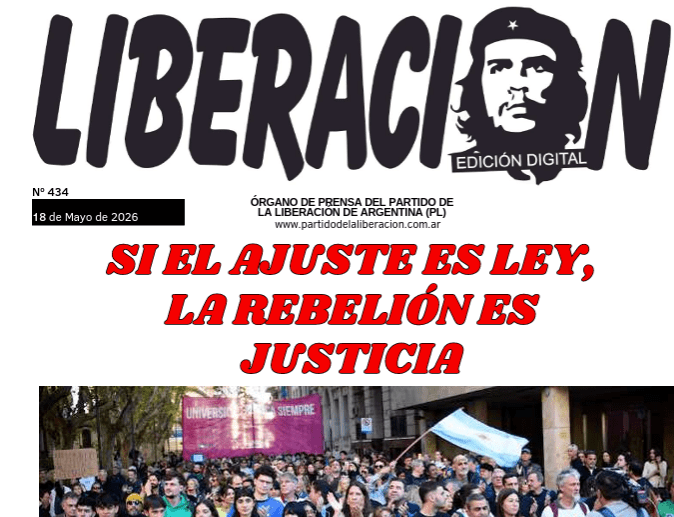
20 May 2026 | SolidarioGB | News Digest News and analysis from Latin America – a news digest In 2026, Latin America is undergoing its deepest geopolitical reconfiguration since the end of the Cold War. The capture of Nicolás Maduro in Venezuela (January 2026) by US forces has activated a new phase of Yankee interventionismContinue reading “Latin America 2026: A Panorama of Crisis and Imperialist Reconfiguration”
Bolivia in Crisis: Analysis of the Current Political Moment
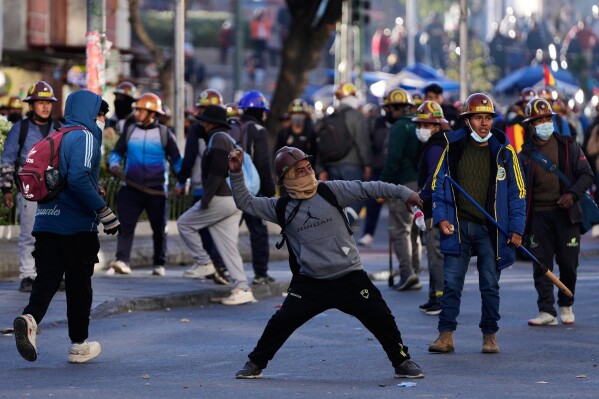
News and analysis from the perspective of the imperialism-socialism correlation of forces 20th May 2026 | SolidarioGb | Latinamerican News Bolivia is experiencing in May 2026 its most severe political crisis in decades. The government of Rodrigo Paz, inheritor of the MAS model, has faced a wave of mass protests that began with opposition toContinue reading “Bolivia in Crisis: Analysis of the Current Political Moment”
Imperialism versus Socialism: Venezuela as a Front in the Global Class Struggle
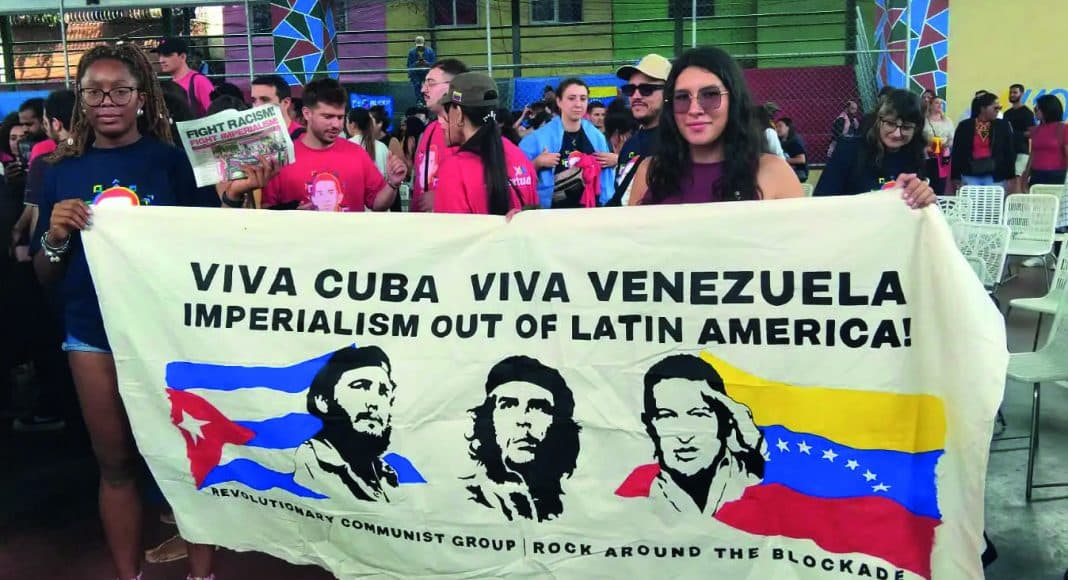
19th May 2026 | By Eduardo Salgado Reyes Executive Summary The US aggression against Venezuela (2017–2026) is not a diplomatic dispute over natural resources, but an episode in the struggle between two antagonistic world systems: imperialist state monopoly capitalism, led by the United States, and the socialist and anti-imperialist camp, of which Venezuela—with its stateContinue reading “Imperialism versus Socialism: Venezuela as a Front in the Global Class Struggle”
The Imperialism of Overproduction: Capital’s Growth Imperative, Inter-Imperialist Rivalry, and the Fracturing of Humanity
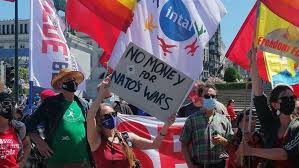
Article – 2 March 2026 Eduardo Salgado Reyes, Editor SolidarioGB Abstract This article examines the fundamental contradictions inherent in global capitalism through a Marxist-Leninist lens. It argues that the root cause of contemporary systemic crises—from financial meltdowns to ecological collapse, social fragmentation, and escalating great-power conflict—lies in capitalism’s insatiable drive for perpetual accumulation within aContinue reading “The Imperialism of Overproduction: Capital’s Growth Imperative, Inter-Imperialist Rivalry, and the Fracturing of Humanity”
Bolivarian Venezuela is attacked by the Empire
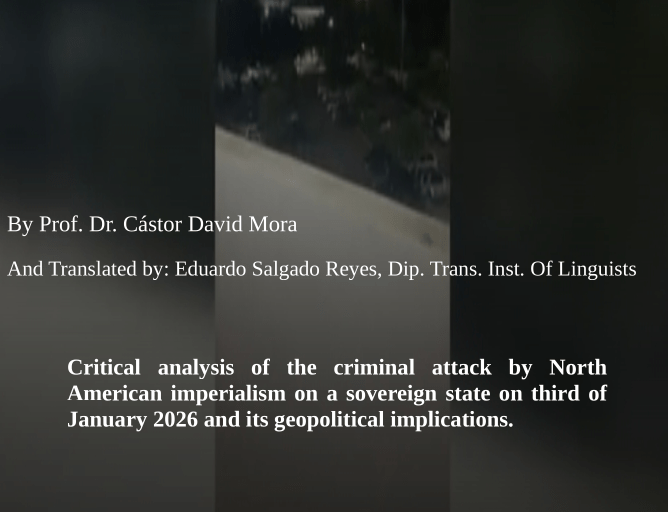
Nuevo libro Traducido por Eduardo Salgado Reyes, Dip. Transl. Inst. of Linguists. https://bookstore369.gumroad.com/l/VenezuelaAttacked?wanted=true The Future as Warning: A Shattering Chronicle of Imperial Aggression What if tomorrow’s headlines announced the unthinkable? This is not a work of fiction. Invasion of the Bolivarian Republic of Venezuela is a searing, meticulously researched critical analysis of a brutal militaryContinue reading “Bolivarian Venezuela is attacked by the Empire”
Latest Energy Price Campaign on OFGEM

The remarkable engagement in our campaign presents a promising foundation for the expansion of the Communist Party of Great Britain (Marxist-Leninist) [CPGB-ML]. The 50,357 petition signatories, 25,146 contributors to the people-powered report, and the 51,505 survey participants showcase a diverse group of individuals with shared concerns about the existing socio-economic structures. The alignment of these sentiments with Marxist-Leninist principles, evident in the campaign’s demands, offers an opportunity to unite these voices under the CPGB-ML banner.
