
Editorial – 14th December 2025
I. Materialist Diagnosis: Class Betrayal as the Origin of the Disaster
A. Social Democracy as Agent of the Bourgeoisie (1990-2025)
The Concertación/Nueva Mayoría historically fulfilled the Kautskyite role of managing Chilean capitalism with a human face, while deactivating class consciousness:
- Co-optation of the labour movement: The CUT transformed into a bureaucratic apparatus, separating union leadership from rank-and-file.
- Maintenance of extraordinary surplus value: The extractivist model delivering mining super-profits to transnational capital remained untouched.
- False consciousness through consumerism: Mass indebtedness was promoted as a substitute for social rights, proletarianising the middle class through credit.
B. Parliamentary Left and Its Institutional Fetishism
Frente Amplio and the Communist Party committed the Bernsteinian error of believing the bourgeois state could be gradually transformed:
- Constitutionalist illusion: Believing changing the juridical superstructure (Constitution) would modify the material base (ownership of means of production).
- Abandonment of accumulation of forces outside the state: The popular powers generated in the Estallido (assemblies, cabildos) dissolved into institutional logic.
- Accelerated bureaucratisation: Militant cadres transformed into career civil servants, reproducing bourgeois power relations.
II. Analysis of Class Force Relations
A. The Chilean Comprador Bourgeoisie and Its Hegemonic Project
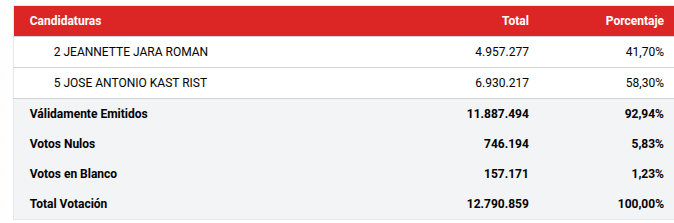
- Kast represents the most reactionary sector of capital: traditional mining, agro-export, financialised retail.
- His programme is fascist-leaning politically (social control) and imperialist-dependent economically (deepening extractivism).
- The paradox: the “left” managed transnational capital’s interests better than the right itself, by containing class struggle through cosmetic concessions.
B. The Fragmented Proletariat and Its Lack of Revolutionary Direction
- Classical industrial proletariat (miners, port workers) co-opted by the model.
- Urban precariat (subcontracted, delivery workers) without classic union organisation.
- Massive industrial reserve army (40% informality) used to depress wages.
- None of these fractions had a vanguard surpassing spontaneous trade unionism.
III. Critique of the Ideological Superstructure of the Chilean “Left”
A. Petty-Bourgeois Idealism Replacing Historical Materialism
- Primacy of identity struggles over class struggle: liberal feminism, ecology without capital critique, culturalist indigenism.
- This corresponds to interests of the educated petty bourgeoisie (professionals, academics, NGOs) seeking social mobility within capitalism, not its overcoming.
- Result: Economic class analysis abandoned for a cultural war dividing the working people.
B. Late Eurocommunism and Its Adaptation to Neoliberalism
- The PCCh practised “salon Gramscianism”: cultural dispute without real economic dispute.
- Its alliance with FA represented capitulation to social democracy.
- The slogan “peaceful road to socialism” transformed into “electoral road to neoliberal inclusion”.
IV. The Current Conjuncture: Historic Defeat and Its Lessons
A. What the Working Class Actually Lost
- Independent organisation: Trade unions turned into state appendages.
- Class consciousness: Replaced by consumer/debtor consciousness.
- Political autonomy capacity: Total dependence on bourgeois elections every 4 years.
B. The Boric Government as “Chilean Kerensky”
- Prepared ground for reaction by:
- Repressing Mapuche protests (colonial continuity).
- Maintaining repressive structures (intact armed forces and police).
- Administering capitalist inflation while protecting business profits.
V. Perspectives from Historical Materialism
A. Immediate Tasks (Defensive Phase)
- Rebuild base organisations outside the state: Popular assemblies, classist unions, territorial coordinators.
- Material defence of the class: Eviction resistance committees, communal kitchens, mutual aid networks.
- Workers’ counter-propaganda: Popular media unmasking real exploitation, not just “corruption”.
B. Long-Term Strategy
- United Class Front: Unite proletarian fractions (formal, informal, migrants) around minimum material demands.
- Embryonic dual power: Build territorial popular power parallel to the bourgeois state.
- Concrete internationalism: Alliances with Argentine workers’ movements (against Milei), Bolivian (against coup-plotters), Peruvian (against repression).
VI. Conclusion: Critique as Revolutionary Weapon
The defeat is not of “progressive ideas” but of the reformist project that believed humanising dependent Chilean capitalism was possible. The materialist lesson is clear:
- The bourgeois state is not neutral: Whoever administers it ends up serving capital.
- Without independent popular power, any “electoral victory” is temporary and reversible.
- The principal contradiction remains capital-labour, not “progressivism-conservatism”.
Kast is the logical product of a Chilean capitalism in crisis, which no longer needs social-democratic mediation to reproduce itself. The task now is rebuilding a socialist movement from below, without institutional illusions, based on:
- Concrete analysis of concrete reality
- Independent class organisation
- Proletarian internationalism
Marxist self-criticism is not lamentation, but a tool to begin anew. As Marx said: “The social revolution cannot draw its poetry from the past, but only from the future.”
Analysis from historical-dialectical materialism – December 2025
“The philosophers have only interpreted the world, in various ways; the point is to change it.” (Theses on Feuerbach, XI)
Discover more from SolidarioGB
Subscribe to get the latest posts sent to your email.
