
Editorial
How UK Law Builds the Watchful State
From Legal Framework to Everyday Intrusion
10 January 2026
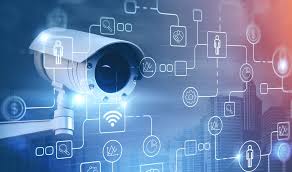
The landscape of privacy in the United Kingdom is not defined by a single, overbearing edifice, but by a complex and interconnected architecture of surveillance. This structure is built brick by brick through primary legislation, expanded by counter-terrorism mandates, and brought to life in public institutions. At its core lies a fundamental tension: the state’s pursuit of security and the citizen’s right to a private life, free from unwarranted intrusion. This article examines how sweeping surveillance powers, born from anti-terrorism imperatives, have been normalized and embedded into the UK’s legal and social fabric, with profound implications for civil liberties.
The Legal Bedrock: IPA, DPA, and the Normalization of Bulk Power
The Investigatory Powers Act 2016 (IPA), often dubbed the “Snoopers’ Charter,” forms the legal cornerstone of the modern surveillance state. It provides a startlingly comprehensive toolkit for state monitoring:
- Bulk Interception: The power to collect vast amounts of international communications data.
- Bulk Personal Datasets: The authority to acquire and analyze large sets of personal information (like financial or travel records) of people not under suspicion.
- Internet Connection Records (ICRs): Mandating that telecoms retain a log of every user’s internet activity for 12 months.
- Equipment Interference: Legalizing state hacking of devices and networks.
While the Data Protection Act 2018 (DPA) and UK GDPR set frameworks for privacy, they often contain broad exemptions for national security and law enforcement. This creates a legal dichotomy where robust privacy principles apply to corporations but are routinely bypassed by the state under the IPA’s expansive remit. The effect is the normalization of mass surveillance, treating entire populations as potential subjects of interest rather than upholding the principle of targeted, suspicion-led investigation.
The Engine of Expansion: Anti-Terrorism Law as a Power Multiplier
Anti-terrorism legislation has consistently acted as the primary engine for expanding surveillance powers, leveraging moments of crisis to enact lasting changes. Key statutes demonstrate this pattern of creeping authority:
- Terrorism Act 2000, Schedule 7: Grants authorities the power to stop, detain, and question individuals at ports and borders without any requirement of suspicion. This power, criticized for its discriminatory use, allows for the seizure of electronic devices and the extraction of data.
- Counter-Terrorism and Border Security Act 2019: Expanded Schedule 7 to include “hostile state activity” and criminalized the mere viewing of online terrorist content, effectively turning browsing history into potential criminal evidence.
- Terrorism Prevention and Investigation Measures (TPIMs): These orders can impose severe restrictions, including geolocation tagging, overnight residence mandates, and stringent limits on communication, based on secret evidence. They represent a form of administrative punishment without criminal trial.
These laws exemplify “function creep“—powers enacted for the gravest threats (terrorism) inevitably become tools for broader policing and public monitoring, eroding procedural safeguards and lowering the threshold for state intervention in private lives.
The Frontline in the Classroom: The Prevent Duty & Societal Surveillance
The most insidious manifestation of this expanded security logic is the Prevent duty, established by the Counter-Terrorism and Security Act 2015. It legally mandates teachers, doctors, university staff, and other public servants to identify signs of “radicalisation” and refer individuals to a de-radicalisation programme called Channel.
Prevent operationalizes surveillance at the grassroots level, creating a decentralized network of scrutiny:
- It reframes safeguarding—a principle meant to protect individuals from harm—into a process of pre-criminal surveillance.
- It incentivizes public sector workers to report on subjective signs of “extremist” ideology, often based on flawed or pseudoscientific indicators, leading to thousands of referrals, particularly targeting Muslim communities. Since the Gaza onslought after 7 October 2023, It has been known to be used also against communist sympathisers in the UK.
- It creates shadow databases of individuals, including children, assessed for ideological risk, with information shared between education, social care, and police.
The damage is twofold: it erodes trust between professionals and communities, and it subjects lawful political and religious expression to security vetting. Prevent represents the ultimate diffusion of the surveillance state, where the watchful eye is no longer just a camera or a database, but a teacher or a doctor.
Reclaiming Liberty in a Watched Society
The trajectory from the IPA’s bulk powers to the classroom dynamics of Prevent reveals a consistent strategy: the construction of a pervasive surveillance ecosystem. This ecosystem is justified by the rhetoric of existential threat but sustained by bureaucratic inertia and technological capability. It risks creating a society where privacy is the exception, freedom of expression is chilled by the fear of being mislabeled, and communal trust is sacrificed for a veneer of security.
The fight for civil liberties in the digital age is no longer solely about opposing a single, Orwellian telescreen. It is about challenging a complex web of laws, duties, and technologies that normalizes observation. It requires robust legal challenges to disproportionate powers, political advocacy to repeal duties like Prevent, and public education to foster a digital literacy of rights. The question remains whether the UK will choose a path of secure liberty, or continue down the road of liberty secured away.
Discover more from SolidarioGB
Subscribe to get the latest posts sent to your email.
