
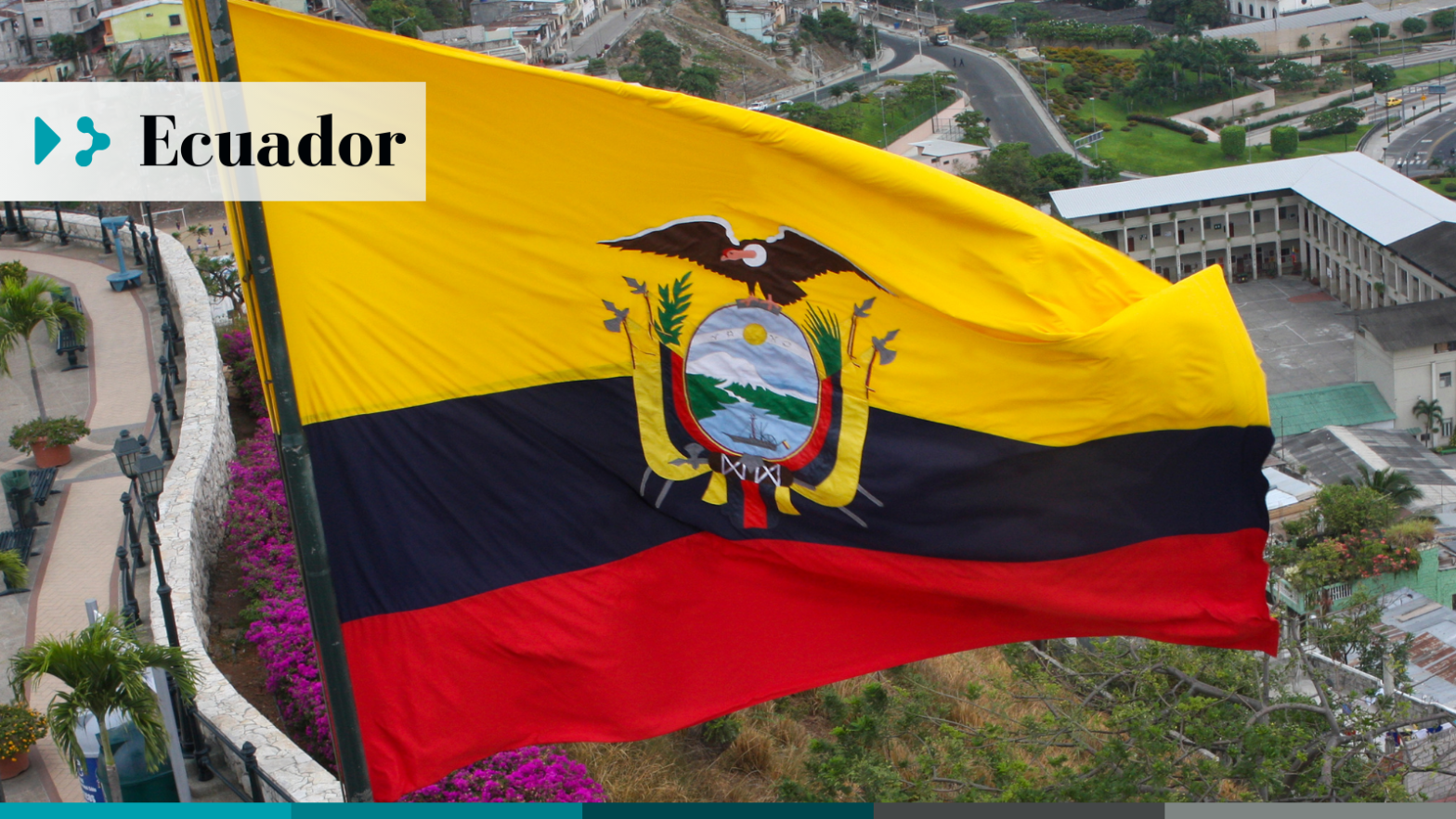
Editorial | Special Announcement | Ecuador
10th March 2026
From this digital platform, born to amplify the struggles for transparency and sovereignty, we celebrate an event that marks a watershed moment in citizen oversight of Ecuador’s international policy.
On 9th March 2026, the Plenary of the Constitutional Court of Ecuador, through Ruling 19-25-TI/26, unanimously resolved – with nine votes in favour (9/9) – that the “Agreement between the Government of the United Arab Emirates and the Government of the Republic of Ecuador for the Reciprocal Promotion and Protection of Investments” requires legislative approval prior to ratification.
WHY THIS MATTERS
At first glance, this might appear to be a mere legal technicality. But it is anything but. What hung in the balance was nothing less than the transfer of competencies inherent to the Ecuadorian legal order to international arbitration tribunals. In other words, disputes between foreign investors and the Ecuadorian State were set to be resolved outside the country, under the rules of ICSID (the International Centre for Settlement of Investment Disputes), without the people – through their representatives in the National Assembly – ever having the opportunity to weigh in.
Scrutinising the treaty against the criteria set forth in Article 419 of the Constitution, the Court determined that the agreement “prima facie falls within the grounds established in numeral 7 of Article 419 of the Constitution” – namely, that it attributes competencies inherent to the domestic legal system to an international body. The reasoning was clear: Articles 18 to 26 of the agreement establish investor-State dispute settlement mechanisms that culminate in international arbitration.
THE ROLE OF CITIZENS AND “VAMOS POR TI ECUADOR”
Behind this ruling, which might otherwise have passed as a footnote in the annals of Quito’s bureaucracy, lies a story of organisation, vigilance, and citizen action that deserves to be told.
The process, initiated by the President of the Republic on 31 December 2025, was closely monitored by a working group from Vamos Por Ti Ecuador, a citizen collective dedicated to defending the Constitution. This multidisciplinary and committed team identified from the outset the risks the treaty posed to national sovereignty.
The challenge lay in the timelines and the necessity of ensuring the Court had all relevant elements before it. It was at this juncture that, from our position as Coordinator of this informational platform (SolidarioGB) , we had the honour of contributing a modest yet significant element to this collective effort. In close coordination with Vamos Por Ti Ecuador, we assisted in consolidating and presenting a technical-legal document that was formally incorporated into the case file. Our contribution focused on systematising arguments and precedents that underscored the need for the agreement to undergo scrutiny by the National Assembly, thereby reinforcing the original request.
This was teamwork – quiet yet effective. An example of how, when civil society organises itself with rigour and responsibility, it can influence decisions that shape the nation’s future.
THE SIGNIFICANCE OF THIS ACHIEVEMENT
This ruling is neither a victory for any particular group against the government, nor a defeat for foreign policy. It is a triumph for the Constitution. It confirms that in Ecuador, a system of checks and balances operates effectively, and that citizens possess not only the right, but the duty, to ensure its enforcement.
The achievement carries multiple layers of meaning:
- Affirmation of Sovereignty: It prevents an international treaty, signed by the Executive, from automatically leading to international arbitration without the legislative branch – as the direct representative of the people – having given its approval.
- Binding Precedent: This ruling establishes jurisprudence for future investment treaties. It is now clear that any clause referring to mechanisms such as ICSID or ad hoc arbitration that displace national jurisdiction must pass through the Assembly’s scrutiny.
- Citizen Empowerment: It demonstrates that citizen participation extends far beyond the ballot box. Organisations like Vamos Por Ti Ecuador and platforms like SolidarioGB can, and must, act as watchdogs of the public interest, contributing knowledge and mobilising arguments in the arenas where the national interest is defined.
LOOKING AHEAD
The journey does not end here. The official publication of the ruling, as ordered by the Court, opens a period for any citizen to intervene in defence of or challenging the constitutionality of the agreement. In other words, the struggle for transparency and oversight continues. We invite all our readers to inform themselves, to read the full text of the ruling, and to remain attentive to the next steps.
From SolidarioGB, we extend our deepest recognition to the team at Vamos Por Ti Ecuador. Their rigour, patience, and unwavering commitment to the rule of law have made it possible for us to speak today of an “achievement” in defence of our democracy.
The news is not merely that the Court carried out its work. The real news is that, when citizens organise and act with knowledge and determination, the Constitution defends itself… because it has people who defend it.
Let us continue building a nation where no closed-door agreement can undermine what belongs to us all.
For a vigilant and sovereign Republic,
The Editor
SolidarioGB.wordpress.com
Discover more from SolidarioGB
Subscribe to get the latest posts sent to your email.
