20 May 2026 | SolidarioGB | News Digest
News and analysis from Latin America – a news digest
In 2026, Latin America is undergoing its deepest geopolitical reconfiguration since the end of the Cold War. The capture of Nicolás Maduro in Venezuela (January 2026) by US forces has activated a new phase of Yankee interventionism in the hemisphere, characterised by the “Monroe Doctrine 2.0”: direct control over strategic resources, installation of puppet regimes, and regional military alliances under the umbrella of the “Shield of the Americas”. This article offers a country-by-country panorama of recent news, the forces at play, and possible scenarios, without attributing any capacity for revolutionary leadership to any existing force.
Mexico
News: President Claudia Sheinbaum (Morena) maintains a position of structural adaptation to US pressure. Around 80% of Mexican exports, 55% of imports, and 41% of foreign direct investment depend on the United States. Mexico does not hold presidential elections in 2026, but its role as an economic node of the new regional order is central. Sheinbaum has condemned the invasion of Venezuela in international forums (OAS, UN), but without concrete measures to break trade ties. The Mexican economy remains subordinate to the US market; any diplomatic “independence” is rhetoric without material foundation.
Analysis: Mexico embodies the contradiction of dependent Bonapartism: anti-imperialist rhetoric that does not translate into a break with US monopoly capital. The continuation of Morenismo after AMLO leaves the structure of economic subordination intact.
Central America and the Caribbean
El Salvador
News: President Nayib Bukele was a central figure at the Shield of the Americas Summit (Miami, March 2026), positioned alongside Trump as a model of pro-imperialist government. His crackdown on alleged organised crime — mass detentions, suspension of constitutional guarantees, and militarisation of neighbourhoods — has been praised by Washington as “security effectiveness”. Bukele leads the most reactionary wing of the regional alliance with the US.
Analysis: El Salvador is a laboratory of tropical fascism: a permanent state of exception, the elimination of institutional checks and balances, and total alignment with the imperialist “security” strategy.
Panama
News: President José Raúl Mulino took part in the Shield of the Americas Summit and has maintained growing military co-operation with Washington. The Panama Canal remains a strategic artery for US–China trade; imperialist pressure to control it has intensified following Maduro’s capture. There is no sign of nationalisation or renegotiation of the canal’s management.
Analysis: Panama retains its historic role as a colonial enclave: formal sovereignty over the canal, but real control shared with transnational interests.
Guatemala
News: President Bernardo Arévalo (Semilla) has maintained friendly positions towards the United States and Israel, without breaking with the power structure inherited from the military. Guatemala does not feature prominently in the 2026 reconfiguration, but its stability as a regional satellite is functional to imperialist control of the Central American isthmus.
Analysis: Guatemala is a stable periphery of the system: no significant social mobilisation, no disputed strategic resources, governed by a landed and commercial bourgeoisie subordinate to US capital since the 19th century.
Honduras
News: President Nasry “Tito” Asfura (National Party) was elected in November 2025 after a contentious vote count lasting nearly a month. He took office on 27 January 2026 and participated in the Shield of the Americas Summit. This represents a rightward turn following the government of Xiomara Castro (Libre). Israel has expressed interest in deepening bilateral ties.
Analysis: Honduras reproduces the Central American pattern of formal alternation without structural change: “progressive” governments that leave property and militarisation untouched, followed by openly reactionary governments that deepen the alliance with the US.
Nicaragua
News: The government of Daniel Ortega (FSLN) maintains rhetorical resistance to imperialism, but is regionally isolated following Maduro’s capture. Nicaragua was not invited to the Shield of the Americas Summit. The economy, already battered by sanctions and internal political crisis, faces greater diplomatic encirclement. There is no news of significant social mobilisation.
Analysis: Nicaragua is a residual anti-imperialist bastion: it survives on revolutionary inertia, but without an autonomous economic base or solid strategic alliances. Ortega’s FSLN represents degenerate Bonapartism, similar to Chavismo but without oil rents to distribute.
Costa Rica
News: President Rodrigo Chaves took part in the Shield of the Americas Summit. Costa Rica has signed a Free Trade Agreement with Israel and will open a Trade and Innovation Office in Jerusalem in the first quarter of 2026. The gesture reverses the 2006 decision to move the embassy from Jerusalem to Tel Aviv.
Analysis: Costa Rica is a technocratic satellite of imperialism: without an army since 1948, but with total commercial and diplomatic alignment with the US and Israel. Its pacifist “exceptionalism” serves as a cover for structural subordination.
Cuba
News: Cuba maintains the longest-standing US blockade on the planet (since 1960). In 2026, the economic crisis has deepened due to the post-pandemic fall in tourism, fuel shortages, and inflation. The National Assembly of People’s Power is a unicameral legislature elected by direct and secret vote every five years. The electoral system, established by Law 72 of 1992, has specific characteristics:
- There is no multi-party system: the Communist Party of Cuba (PCC) is the only legal political organisation. It does not directly field candidates, but controls the process through Candidates’ Commissions and subordinate mass organisations.
- Non-partisan candidacy at municipal level: delegates to Municipal Assemblies are nominated directly by residents in ward assemblies.
- Controlled candidacy at national level: deputies to the National Assembly are selected by Candidates’ Commissions involving mass organisations (CDRs, CTC, FMC, UJC), all linked to the PCC. The ballot is closed and non-blocked: voters may vote for one, several, all, or none, but may not add candidates.
- Generational renewal: political leadership has moved from Fidel Castro (died 2016) to Raúl Castro (retired 2018) to Miguel Díaz-Canel (president since 2018, re-elected 2023). The Politburo and Central Committee include cadres trained in the 1990s and 2000s.
Analysis: Cuba is a living contradiction of socialism in one country: undoubted achievements in health and education, an economy asphyxiated by blockade and state bureaucracy. The Cuban electoral system is neither “pluralist democracy” nor “dictatorship without participation”; it is a specific form of limited direct democracy where the PCC monopolises political direction but allows some neighbourhood participation in municipal nomination. The current economic crisis derives mainly from imperialist asphyxiation (blockade, sanctions, exclusion from international trade) and the limits of central planning in a small, island economy, not from the absence of mechanisms for local participation.
Dominican Republic
News: President Luis Abinader took part in the Shield of the Americas Summit. The Dominican Republic maintains stable relations with the US and has received investment in free-trade zones and tourism. There is no significant political crisis.
Analysis: The Dominican Republic is a tourist and manufacturing periphery: a dependent development model based on free-trade zones (maquilas), tourism, and remittances. No significant social movement or disputed strategic resources.
South America
Venezuela
News: The capture of Nicolás Maduro (3 January 2026) by US special forces marked the collapse of Chavismo as a state project. The caretaker government of Delcy Rodríguez has handed Alex Saab over to the DEA (May 2026) and is negotiating the privatisation of PDVSA with Chevron and ExxonMobil. The opposition of María Corina Machado and Edmundo González has not taken power; the vacuum is managed by a collaborationist bureaucracy.
Analysis: Venezuela is a laboratory of direct imperialist transition: from rentier, anti-imperialist Bonapartism to an extractivist protectorate. The lesson for the region is the impossibility of anti-imperialist reformism without a break with capitalism.
(For detailed analysis, see the specific article on Venezuela on this blog.)
Colombia
News: Presidential elections in May–June 2026. The coalition primary (March) gave victory to Paloma Valencia (Democratic Centre, Uribista) with 3.2 million votes (55% of the primary vote), compared to 616,000 for the centre and 596,000 for the left. Valencia proposes a “new Plan Colombia” with the US, aggressive counter-narcotics policy, and partial privatisation of Ecopetrol. Iván Cepeda (Historic Pact) is the continuity candidate of Petro, with a platform of social spending and environmental sovereignty.
Analysis: Colombia is an electoral battleground for the new regional order: a probable Valencia victory would consolidate total alignment with the US, the militarisation of social conflict, and the handover of strategic resources. The defeat of the petrist left would confirm the impossibility of reformism in the context of imperialist offensive.
Ecuador
News: The government of Daniel Noboa maintains forced dollarisation, has reopened the Manta military base, and signed lithium contracts with Albemarle. Correísmo (RC5) is in institutional opposition without any capacity for mobilisation. Isolated protests against mining and extractivism have not converged into a national movement.
Analysis: Ecuador is an extractivist protectorate in the making: handing over lithium, oil, and ports to transnational capital, with repression of dissent. The absence of revolutionary leadership leaves the field free for the consolidation of a puppet regime.
(For detailed analysis, see the specific article on Ecuador on this blog.)
Peru
News: Presidential elections in April 2026. Fragmented field with over 35 registered candidates. Rafael López Aliaga (Mayor of Lima, Popular Renewal) is positioning himself as a Bukele-style leader: a hard line against crime, immediate mining expansion, and a purge of Bolivarian influence. He competes with Keiko Fujimori for the conservative base. The comedian Carlos Álvarez leads anti-establishment polls. The country hosts 1.5 million Venezuelan migrants.
Analysis: Peru is a laboratory of Andean fascism: a probable victory for López Aliaga or Fujimori would consolidate a permanent state of exception, open-cast mining without controls, and total alignment with the imperialist “security” strategy. Álvarez’s anti-establishment stance is populism without a project, channellable in any direction.
Bolivia
News: A regime crisis in May 2026. President Rodrigo Paz annulled Law 1720 (agricultural mortgages) under pressure from massive protests. 67 roads blocked, the Government Palace besieged with mining dynamite, and demands for the president’s resignation. The COB (Central Obrera Boliviana) is leading, but without an alternative programme. Evo Morales has been declared in rebellion, accused of inciting protests. The US defends Paz for “restoring order”.
Analysis: Bolivia is experiencing a crisis of hegemony without leadership: a government that cannot govern, an opposition that cannot replace it, and masses in motion without a state project. This is a Gramscian interregnum where revolutionary leadership is absent.
(For detailed analysis, see the specific article on Bolivia on this blog.)
Paraguay
News: President Santiago Peña took part in the Shield of the Americas Summit. Paraguay maintains recognition of Taiwan (not China) and stable relations with the US and Israel. The economy is based on genetically modified soya (massively exported to China, paradoxically) and hydroelectric power (Itaipú). There is no significant political crisis.
Analysis: Paraguay is an agricultural periphery of imperialism: soya latifundia, residual militarisation from the Stroessner dictatorship, and diplomatic subordination to the US. The “Taiwan–China paradox” reflects structural dependence: it sells soya to China, but recognises Taiwan under US pressure.
Chile
News: José Antonio Kast was elected president in December 2025 with nearly 58% of the vote. He took part in the Shield of the Americas Summit. His government represents a reactionary turn after Gabriel Boric’s interlude. Kast has expressed a desire to strengthen alliances with Israel. Chile’s Palestinian community (the largest outside the Middle East) maintains significant political activism.
Analysis: Chile is a democratic Pinochetist restoration: Kast does not need a coup because the right has won electorally. His platform of “security”, a hard line on migration, and alignment with the US and Israel reproduces the model of the 1980s without open dictatorship. “Chilean democracy” is a façade for oligarchic continuity.
Argentina
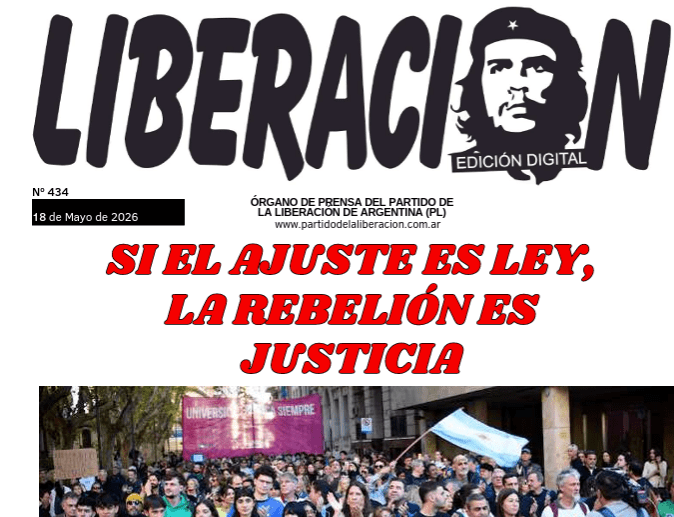
News: President Javier Milei is an emblematic figure of the pro-imperialist alliance. He took part in the Shield of the Americas Summit. His “therapeutic shock” (devaluation, subsidy cuts, privatisations, de facto dollarisation) has generated severe recession but applause from financial markets and the IMF. Social resistance (trade unions, social movements) has been contained without national convergence.
Analysis: Argentina is a laboratory of extreme neoliberal adjustment: Milei represents the deliberate destruction of state capacity in order to privatise everything (YPF, Aerolíneas Argentinas, Banco Nación). The “freedom” of his discourse is the freedom of monopoly capital to plunder without obstacles.
Brazil
News: Presidential elections in October 2026. Lula (PT) is seeking re-election at the age of 80, with a platform of BRICS expansion and state-led industrialisation. But he faces a crisis of popularity due to economic deterioration, the Banco Master scandal (similar to mensalão), and a perception of ineffectiveness. The post-Bolsonaro right (Tarcísio de Freitas, Romeu Zema, Ronaldo Caiado) proposes total alignment with the US, ratification of the EU–Mercosur agreement, and nearshoring to replace Chinese supply chains.
Analysis: Brazil is a regional hegemonic dispute: the election will decide whether Latin America’s largest economy continues to lead the BRICS/Global South axis or pivots towards a trade architecture integrated with the US. Lula represents conciliatory Bonapartism that does not break with capitalism but attempts to mediate between imperialisms. The right represents direct handover to US capital.
Uruguay
News: Uruguay does not feature prominently in the 2026 reconfiguration. The government of Luis Lacalle Pou (2020–2025) was succeeded by Yamandú Orsi (Broad Front) in March 2025. Uruguay maintains institutional stability, an economy based on financial services, soya, and tourism. It took part in the Shield of the Americas Summit.
Analysis: Uruguay is a stable periphery of the Southern Cone: no crisis, no mobilisation, no disputed strategic resources. Its Broad Front “progressivism” is dependent social democracy that does not alter the structure of subordination to transnational capital.
Guyana and Suriname
News: President Irfaan Ali (Guyana) was a central figure at the Shield of the Americas Summit, positioned alongside Trump. Guyana possesses more than 11 billion barrels of offshore oil and the world’s fastest-growing economy. The territorial dispute with Venezuela over the Esequibo remains latent. Suriname does not feature prominently.
Analysis: Guyana is a new imperialist oil enclave: the massive oil discovery (ExxonMobil) has turned the country into an object of dispute between the US and China. Alignment with Trump is protection for plunder; the Guyanese population does not benefit significantly from the oil rents.
Regional Conclusion: The New Map of Imperialism in Latin America
| Category | Countries | Characteristic |
|---|---|---|
| Extractivist protectorates | Venezuela, Ecuador, Bolivia (in crisis), Guyana | Handover of strategic resources to transnational capital; puppet regimes or regimes in formation |
| Military satellites | El Salvador, Colombia (likely), Peru (likely), Honduras | Alliance with the “Shield of the Americas”; internal militarisation; repression of dissent |
| Conciliatory Bonapartisms | Mexico, Brazil (Lula), Uruguay | Anti-imperialist rhetoric without structural rupture; maintained economic subordination |
| Residual bastions | Cuba, Nicaragua | Rhetorical resistance but isolated; economic crisis; no capacity for a regional project |
| Stable peripheries | Guatemala, Dominican Republic, Costa Rica, Paraguay, Panama | No significant crisis; structural subordination to imperialist capital |
The correlation of forces is clear: Yankee imperialism has moved from containment (the 2000s–2010s) to direct offensive (2024–2026). The capture of Maduro was the turning point that normalised military intervention as an instrument of regional policy. The “Monroe Doctrine 2.0” is not rhetoric; it is a territorial carve-up of the hemisphere under US control.
What does not exist: any revolutionary leadership capable of articulating resistance. “Progressive” governments (Mexico, Brazil) negotiate; social movements (Bolivia, Ecuador) act without a project; institutional lefts (Colombia, Chile) have been electorally defeated or co-opted. The vacuum is total.
Class analysis identifies contradictions; it cannot substitute for the leadership that resolves them.
References
- Robeco (2026). “Navigating the 2026 Latin American Power Shift.”
- Atlantic Council (2025). “Latin America and the Caribbean in 2026: Ten Defining Questions.”
- J.P. Morgan (2026). “The 2026 Electoral Supercycle in Latin America.”
- Workers Voice US (2026). “The New Policy of U.S. Imperialism Toward Latin America.”
- Left Voice (2026). “Trump ‘Shield of the Americas’ Alliance.”
- Jewish Policy Center (2026). “The Reshaping of Latin America.”
- Santos, G. (2026). “The Moment of Truth for Our America.” CSUB.
- France 24, AP, Reuters, 2026 coverage.
- IACHR reports on the Sacaba and Senkata massacres (November 2019).
- COB and CSUTCB communiqués, May 2026.
- Constitution of Cuba (1976, amended 1992, 2002); Law 72 of 1992 (Electoral System).
- Candidature Commissions, Municipal Assemblies, National Assembly of People’s Power (official data 2023–2026).
Final note: This article is limited to news and analysis of the Latin American situation. It does not propose strategic actions nor attribute any capacity for revolutionary leadership to any existing force. The transformation of the regional crisis into a historic project would require subjective conditions — a communist party rooted in the masses — which are not present at this time. The corrections concerning Cuba reflect specific research into the Cuban electoral system and avoid imprecise claims about “absence of generational renewal” or “lack of workers’ democracy” that did not correspond to the reality of the Cuban political system.
Discover more from SolidarioGB
Subscribe to get the latest posts sent to your email.
