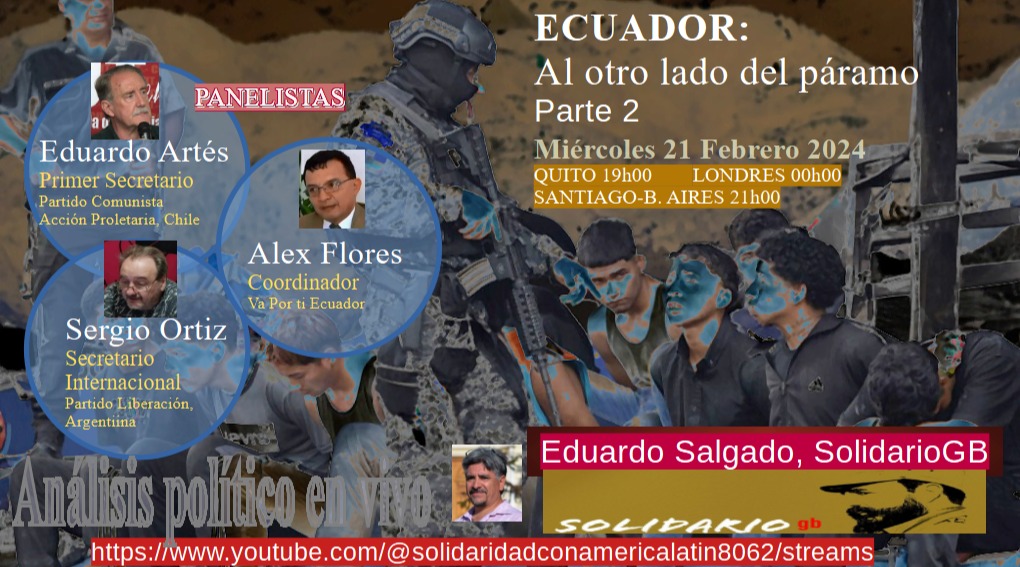
Ecuador finds itself ensnared in an unprecedented crisis as President Daniel Noboa, at the helm for just under two months, has unleashed a full-scale war on the country’s criminal gangs. This drastic move comes hot on the heels of riots in six prisons, where prison guards were held hostage, and leaders of two major drug cartels managed to orchestrate daring escapes. The turmoil further intensified with armed men storming Guayaquil’s TC television channel, taking staff hostage during a live broadcast.
Alina Manrique Cedeño, a journalist at the channel, disclosed that the involved gang members were notably young and appeared to be receiving orders via their cell phones. The audacious attack on the television channel, coupled with armed groups infiltrating universities and public institutions, resulted in widespread looting across Quito.
In a bid to quell the escalating violence, President Noboa declared an “internal armed conflict” against the criminal gangs, categorizing more than 20 of them as “terrorist organizations” and “belligerent non-state actors.” This page ripped from the playbook of previous Mexican strategies has prompted the deployment of the country’s armed forces onto the streets to aid the police and reinstate law and order. The initial order is slated for an 8-day duration, with potential extensions looming.
The crisis has already sent shockwaves through the region, with Peru declaring a state of emergency on its northern border with Ecuador and contemplating the shuttering of the border while dispatching troop reinforcements. The Mexican government has issued warnings to its citizens in Ecuador, advising against unnecessary outings. Both the US and Chinese embassies in the country have canceled consular appointments in Guayaquil, a city pivotal for drug shipments and gang violence.
President Noboa’s contentious characterisation of the drug cartels as “terrorist organizations” and “belligerent non-state actors” raises eyebrows regarding the potential for military support and direct intervention, particularly from the United States. This aligns with previous reports dating back to June 2022, wherein the US was already entertaining the idea of escalating its war on drugs in Latin America. The Biden administration is now extending a hand in increased cooperation with Ecuador to tackle the crisis.
National Security Council spokesman John Kirby asserted, “We are willing to take concrete measures to enhance our cooperation with the Government of Ecuador in its fight against violence.” National Security Advisor Jake Sullivan echoed this sentiment, expressing the Biden administration’s readiness to engage in discussions concerning Ecuador’s needs.
In the background, an undisclosed agreement signed by Washington with Ecuador’s outgoing President Guillermo Lasso has allowed the entry of US troops onto Ecuadorian soil. Argentina, too, has not ruled out providing military aid, including troops, to Ecuador, describing the situation as “a continental-wide issue” necessitating protection.
The roots of Ecuador’s crisis delve into a complex history involving shifting political landscapes, economic challenges, and the illicit drug trade. President Noboa’s decision to involve the military in combating organized crime mirrors tactics employed by his predecessors, Lenin Moreno and Guillermo Lasso, as well as similar strategies in Colombia and Mexico, yielding disastrous results.
The controversial use of the armed forces in the fight against organized crime, despite Noboa’s initial promises during his electoral campaign to address crime through socioeconomic measures, police training, and community policing, has sparked widespread criticism. The assassination of presidential candidate Fernando Villavicencio in August 2023 and subsequent violence revived calls for tougher strategies.
Daniel Noboa, the scion of Ecuador’s wealthiest man, Álvaro Noboa, boasts a background rooted in the United States, having obtained graduate degrees from prestigious institutions. His political party, a mere seven months old, comprises a governing team with minimal experience in senior government positions.
The country’s rapid descent into chaos over the past seven years, transforming Ecuador from one of the safest in Latin America to the fifth most dangerous globally, paints a grim picture. Contributing factors include the drug trade, corruption allegations, austerity measures, banana exports, and dollarization.
President Noboa’s drastic approach, despite initial promises of addressing crime through socioeconomic means, mirrors the challenges faced by his predecessors. The crisis, fueled by increasing homicide rates and a collapsing prison system, has prompted international responses and raised questions about the effectiveness of military intervention in combating organized crime.
As Ecuador grapples with its worst crisis this century, the path forward remains uncertain, and the international community closely watches the unfolding events, pondering potential implications for the region. The echoes of a tumultuous past and the weight of current decisions may reshape the nation’s trajectory, leaving an indelible mark on its future.
Discover more from SolidarioGB
Subscribe to get the latest posts sent to your email.
