Introduction
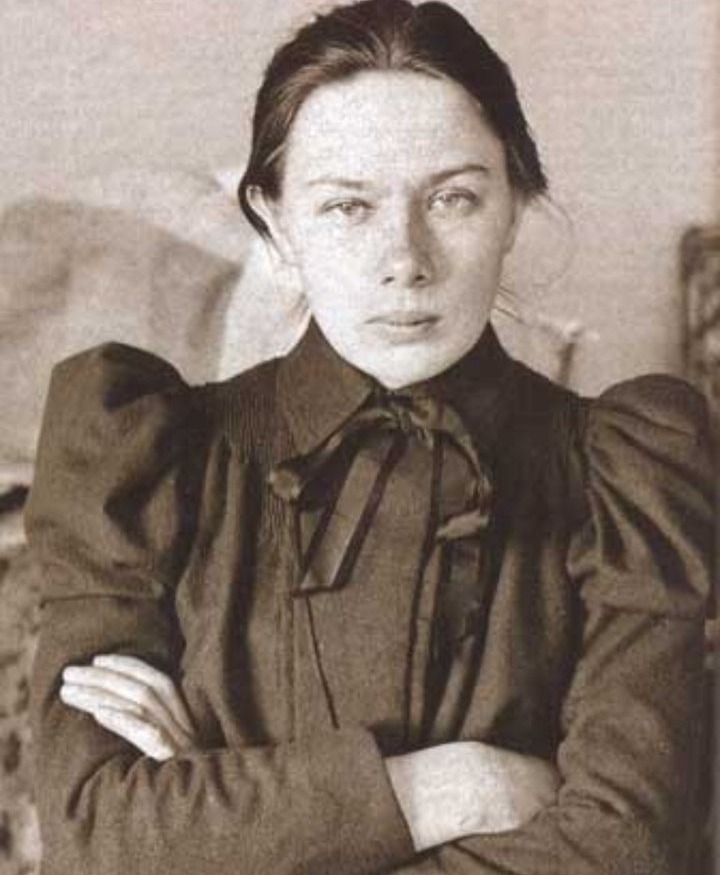
On 26 February 1869, one of the most fascinating and, paradoxically, most misunderstood figures of the Russian Revolution was born in St Petersburg. We are speaking of Nadezhda Konstantinovna Krupskaya. For many, her name remains inevitably eclipsed by that of her husband, the Bolshevik leader Vladimir Ilyich Ulyanov, better known as Lenin. But to reduce Krupskaya to merely “Lenin’s wife” is to deliberately ignore a formidable intellectual, a key political strategist, and the intellectual architect of the educational system that would transform the Soviet Union.
In this article, we delve into the life of this woman of unwavering convictions, exploring her crucial role in the Bolshevik Party and her monumental legacy in Soviet pedagogy and culture.
Early Years: Forging a Revolutionary Consciousness
The daughter of a down-at-heel noble family, Krupskaya grew up in an environment of economic hardship but immense intellectual richness. Her father, a military officer with sympathies for reformist movements, and her mother, a governess, instilled in the young Nadia a love of knowledge and a keen sense of social justice.
From a very young age, she was drawn to the populist and, later, Marxist ideas that were fermenting in the intellectual circles of Tsarist Russia. She worked as a governess and, crucially, as a teacher at a Sunday school for workers. This experience in the factories of St Petersburg was not merely a job; it was her political university. There, teaching workers to read and write, she understood first-hand the harsh conditions of the proletariat and the transformative power of education.
The Pillar of the Party: Secretary, Translator and Strategist
It was in these Marxist circles that she met a young and energetic lawyer named Vladimir Lenin. They shared not only an ideology but an absolute devotion to the revolution. They married in 1898 while in exile in Siberia, and from then on, their union was both personal and political.
Krupskaya’s role in the gestation of the Bolshevik Party was indispensable. While Lenin wrote pamphlets and developed his political theory, Krupskaya was the organisational mind that made it all possible.
- The Underground Coordinator: During the long years of exile in Europe (London, Munich, Geneva), Krupskaya became Lenin’s personal secretary, but her work went far beyond administration. She was responsible for maintaining correspondence with party committees scattered across the vast Russian Empire. She wrote in invisible ink, deciphered coded messages, and managed the finances and dispatch of propaganda. Without her meticulous coordination, the Bolshevik revolutionary network could not have remained standing.
- The Doctrinal Voice: She was not merely an assistant. Krupskaya was a theorist in her own right. She wrote extensively on subjects close to her heart, particularly workers’ education. Moreover, her command of several languages made her the official translator of the key works of Marx and Engels, ensuring the party had access to the fundamental sources of communist thought.
The October Revolution: The Climax
When the February Revolution of 1917 overthrew the Tsar, Krupskaya accompanied Lenin on the famous journey in the “sealed train” back to Russia. Once in Petrograd, she stood by his side during the tense months that culminated in the October insurrection.
With the Bolsheviks in power, Krupskaya’s work did not end; it merely shifted its battleground. While Lenin became the face of the new government, she assumed a fundamental role from the shadows of the executive, focusing on her true passion: education.
The Architect of Soviet Education
Appointed Deputy People’s Commissar for Education in 1917, Krupskaya was given the titanic task of building an educational system from scratch, based on Marxist principles. Her vision was radically progressive for its time:
- The Unified Labour School: She championed the creation of a free, secular, compulsory, and co-educational school for all children, regardless of class. This concept, the “Unified Labour School,” sought to end the educational privilege of the elite and to mould the builders of the new society.
- Innovative Pedagogical Methods: She firmly opposed the authoritarian, rote-learning style of education from the Tsarist era. Inspired by thinkers such as John Dewey, she promoted learning through activity, manual work, and connection with real life. She was one of the main drivers of active pedagogical methods and student self-management.
- The Battle Against Illiteracy: In a country with an illiteracy rate exceeding 60%, this was an absolute priority. Krupskaya massively organised and promoted the likbezy (literacy programmes) for adults, bringing reading and writing to the most remote corners of the Soviet Union.
- Libraries as Cultural Hubs: She understood the library not as a mere repository of books, but as a neuralgic centre of the community, a space for continuous education and the self-improvement of the proletariat. She dedicated enormous efforts to creating and standardising a massive network of public libraries across the country, establishing cataloguing and access principles that endured for decades.
The Legacy of a Revolutionary
Lenin’s death in 1924 was a devastating blow. Krupskaya, loyal to the party but critical of certain excesses, maintained a complex profile during Stalin’s rise. Although she opposed some of his methods, she continued to work tirelessly in education and pedagogy until her death in 1939.
Nadezhda Krupskaya was far more than the wife of the Revolution’s leader. She was the organisational mind that sustained the party’s underground structure, the voice that theorised about mass education, and the official who, with her feet on the ground, laid the foundations of the Soviet educational and library system.
In history, her figure reminds us that revolutions are made not only by great orators or generals, but also by those who, from the patience of the archive, the secrecy of correspondence, and the humility of the classroom, weave the future of nations.
Discover more from SolidarioGB
Subscribe to get the latest posts sent to your email.
