
Shake It Up’s resident-directed model sounds radical. But without class struggle at its core, does it empower the many — or manage the poor?
Author: Eduardo Salgado Reyes
A bold experiment — with a silent hole
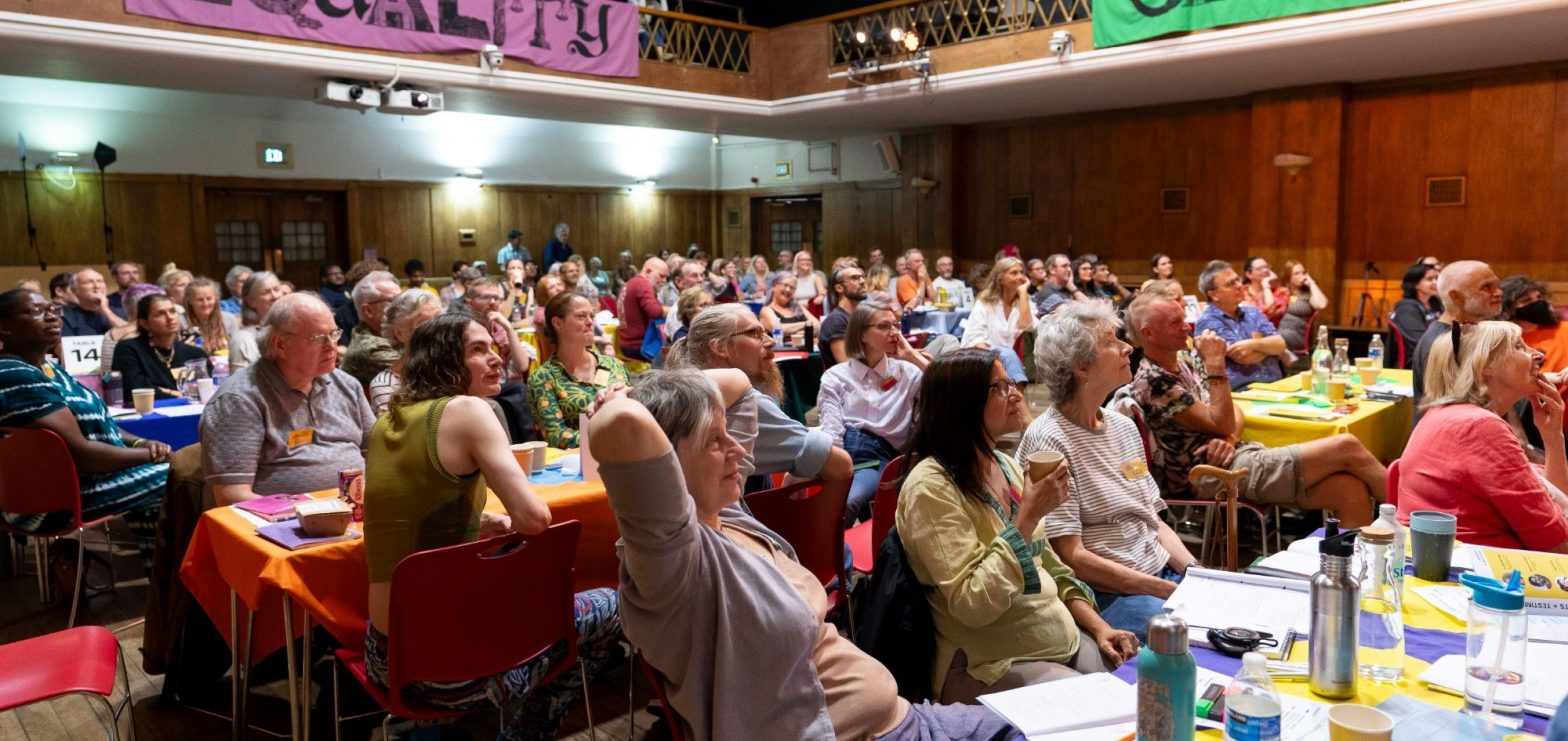
We at Shake It Up have spent months designing something we truly believe in: a permanent, resident-directed governing institution for Lambeth. No party whips. No town hall bureaucracy. Just a demographically representative assembly of randomly selected residents – including young people – meeting regularly, with binding power over what independent councillors vote for and what issues get prioritised.
It’s anti-top-down. It’s pro-prevention. It’s sortition, not election.
But recently, we were asked a sharp question – and it stopped us cold.
“There is nothing about class struggle, working class politics, nor socialism. By broadening interest, are you diluting working class struggle and interests?”
We could have brushed it aside. Instead, we sat with it. And the honest answer is uncomfortable.
Yes. Broadening interest does dilute working class power – unless you build deliberate, structural protections against that dilution.
Let us explain why – and what we think Shake It Up should do about it.
What our proposal gets right (and we won’t abandon)
First, let’s be clear what we’re proud of.
Our model says: legitimacy comes from statistical resemblance to the community, not from activist energy or self-selection. We provide free food, central venues, reserve lists for drop-outs. We reject crisis-management politics and aim for root causes – housing, mental health, substance abuse, community safety. We demand transparency (public, filmed lotteries) and clear accountability pathways from assembly outputs to council mandates.
These are not small things. In a borough where Lambeth Council has ignored tenants for decades, a permanent, resident-directed assembly would be a genuine democratic gain.
But a gain for whom?
The dilution problem, spelled out
Our current public language is deliberately broad. We talk about “residents”, “community organisations”, “faith groups”, “trade unions” – all as stakeholders. We say “working people, carers, and marginalised residents” – but we never name class, let alone class struggle.
Here is what that erases:
Working-class struggle needs Our broad language delivers
Landlords, developers, austerity as named enemies “Top-down politics” and “bureaucracy” – abstract villains
Rent strikes, occupations, collective action “Working alongside councillors and civil servants”
Independent working-class organisation (tenants’ unions, shop stewards) A mixed-class assembly (landlords, managers, police sit beside renters)
Paid participation as a right Free food and flexible timing – charity, not power
Binding demands backed by strike leverage “Clear accountability pathways” with no enforcement if the council refuses
The painful truth: a buy-to-let landlord who lives in Lambeth is also a “resident”. Our assembly gives them an equal vote with a family in temporary accommodation. That’s not neutrality – that’s a pro-landlord design in disguise.
The test: what happens when the council says “no”?
Imagine our assembly passes a binding proposal:
Rent controls in Lambeth, council-enforced, with a tenant’s right to withhold rent if repairs are not done within 14 days.
Great. Working class people win materially – lower rents, better conditions.
Then Lambeth Council says: “We cannot legally implement this without central government changing the law.”
Now our dilution becomes defeat. Our assembly has:
No strike fund
No tenant union structure already in place
No workplace delegates to call a rent strike
No shared language of class struggle to frame the conflict
Instead, the moderate wing of the assembly (including landlord-residents and Labour councillors) will propose: “Let’s write a letter, gather evidence, lobby MPs.”
That is not democracy – that is a safety valve for capitalism.
Our well-intentioned resident assembly would end up legitimising the very council that ignores working class needs. Better parks, slower traffic, cycling lanes – while the housing crisis deepens.
Can we have both breadth and working-class power?
Yes – but only if we stop pretending that “all residents are equal” is politically neutral.
We need structural protections that privilege working-class interests, not just proportionally represent them.
Here are real design choices – some easy, some hard:
Design feature Breadth preserved? Protects working class?
Weighted voting – tenants get 2x votes of landlords No – landlords refuse Yes
Separate working-class caucus within assembly, with veto on economic issues Partial – others still participate Yes
Facilitators must be working class (not professionalised NGO staff) Partial – may alienate the middle class Yes
Assembly decisions can trigger automatic rent strike call (via existing unions) No – scares moderates Yes – serious power
Publicly audited class background of every member Yes – full transparency Yes – exposes bias
Our current public document chooses none of these. That is not an accident – it’s the price of “broad appeal”.
A way forward: dual structure, not single assembly
Shake It Up should stop pretending one assembly can do everything.
Instead, we propose a dual structure:
1. The Working-Class Assembly (behind closed doors, real power)
Tenants, precarious workers, unemployed, cleaners, carers.
Meets monthly.
Organises direct action (rent strikes, workplace walkouts, occupations).
Builds strike funds and mutual aid.
2. The Resident-Directed Council Assembly (public facing, broad tent)
The sortition model we already designed.
Meets quarterly.
Proposes policy, holds councillors accountable.
Accessible, transparent, media-friendly.
The binding rule between them:
The resident assembly cannot pass any proposal on housing, wages, utilities, or community safety that contradicts the working-class assembly’s position.
This keeps our public “broad interest” front for funding, media, and council relations – but prevents dilution from becoming betrayal.
What we are not saying
We are not saying our original proposal is useless. It is not.
A permanent, resident-directed assembly would be a genuine democratic gain. It would be better than what Lambeth has now. It would give ordinary people a voice they currently lack.
But a voice is not power.
Power is the ability to enforce your will when the council, the law, or the landlord says no. Without a working-class assembly and the credible threat of collective action, our beautiful sortition model becomes participatory legitimacy for austerity management.
Our commitment
Shake It Up will not abandon the resident assembly idea. But we will no longer pretend it is enough.
From today:
We will publish a class audit of our own organising team.
We will begin building a Lambeth Working-Class Assembly – tenants’ unions, shop floor delegates, unemployed workers centres. It will not be public-facing initially. It will be real.
We will revise our public proposal to include structural protections for working-class power, even if that costs us some middle-class support.
We will ask every partner organisation: Do you accept that class struggle is real, and that our assembly must be designed around it – not in denial of it?
If that loses us a grant or a partnership, so be it. Broad interest without working-class power is not radical democracy. It is good governance for the rich.
Final word
Lambeth is a borough of huge inequality. Waterfront apartments and overcrowded council estates. Hedge fund managers and zero-hour contracts.
A resident assembly that treats both as equal “stakeholders” is not neutral – it’s a design choice. And it’s the wrong one.
We need sortition and strike power. Representation and confrontation. Broad appeal and working-class veto.
Shake It Up was founded to shake things up. Not to manage decline more politely.
Let’s build the dual structure. Then we can really govern.
Want to get involved?
Come to our next public meeting – date TBC.
#ShakeItUp #Lambeth #Sortition #ClassStruggle #DualPower #HousingJustice
Discover more from SolidarioGB
Subscribe to get the latest posts sent to your email.
